
Dengue Fever Symptoms: Early Signs and Warning Signs to Know
Dengue fever symptoms can begin with a sudden fever, headache, pain behind the eyes, muscle or joint aches, nausea, vomiting, or a rash. Most symptomatic infections are not severe, but CDC says about 1 in 20 people who become sick with dengue develop severe dengue, which can become life-threatening within hours.
For U.S. readers, dengue is particularly relevant after travel to tropical or subtropical regions. CDC reports that most dengue cases in the continental United States occur among travelers infected elsewhere, although dengue transmission also occurs in U.S. territories and some locally acquired cases are reported.
Also Read: COVID Symptoms in 2026: What to Know.
What Are the Early Dengue Symptoms?
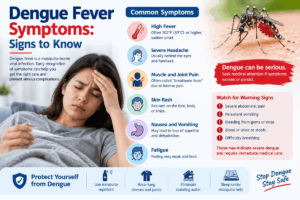
Early dengue symptoms usually develop several days after infection. CDC and WHO report that symptoms commonly include:
- Sudden high fever
- Severe headache
- Pain behind the eyes
- Muscle, bone, or joint pain
- Nausea or vomiting
- Rash
- Fatigue
Symptoms generally last about 2 to 7 days, and many people recover within about a week. Some people infected with dengue have no symptoms at all.
Because these symptoms can resemble influenza and other viral infections, symptoms alone cannot confirm dengue. A blood test may be used to confirm infection. People with fever who live in or have recently traveled to an area where dengue occurs should tell their healthcare provider about that exposure.
When Do Dengue Warning Signs Appear?
One of the most important facts about dengue is that a falling fever does not always mean the illness is improving.
Warning signs often appear around the time the fever goes away, commonly during the next 24 to 48 hours. The CDC advises immediate medical attention for warning signs such as:
- Severe belly pain or tenderness
- Repeated vomiting
- Bleeding from the nose or gums
- Vomiting blood
- Blood in the stool
- Extreme tiredness, restlessness, or irritability
Severe dengue is a medical emergency and may cause shock, serious bleeding, or organ impairment.
Dengue Symptoms in Adults
Dengue symptoms in adults can range from mild illness to severe disease. Adults may experience high fever, intense headache, pain behind the eyes, body aches, nausea, vomiting, rash, and fatigue.
People who have previously had dengue can become infected again with another dengue virus type. A second infection is associated with a greater risk of severe dengue.
What Should You Do If You Suspect Dengue?
If dengue is possible:
- Contact a healthcare professional, especially after travel to an area where dengue occurs.
- Tell the provider about recent travel and mosquito exposure.
- Rest and drink plenty of fluids.
- CDC recommends acetaminophen for fever and pain.
- Avoid aspirin and ibuprofen unless a healthcare professional specifically advises otherwise, because these medicines can increase bleeding risk.
- Watch particularly closely for warning signs as the fever subsides.
There is no specific antiviral medicine that cures dengue. Treatment focuses on supportive care and monitoring for complications.
What U.S. Readers Should Know in 2026
CDC’s 2026 dengue surveillance data are provisional and can change as health departments report additional cases. CDC also notes that reporting delays and underreporting can affect surveillance figures.
The latest CDC clinical guidance, updated February 24, 2026, continues to emphasize early recognition of warning signs because severe disease can develop rapidly around the time the fever decreases.
Frequently Asked Questions
What are the first signs of dengue fever?
Fever is the most common symptom, often accompanied by headache, pain behind the eyes, muscle or joint pain, nausea, vomiting, or rash.
How long do dengue symptoms last?
Typical dengue symptoms last about 2 to 7 days. Many people recover within about a week.
What are the warning signs of severe dengue?
Severe abdominal pain, persistent vomiting, bleeding, blood in vomit or stool, and extreme tiredness or restlessness are important warning signs.
Can dengue symptoms get worse after the fever goes away?
Yes. Warning signs can appear after the fever decreases, often within 24 to 48 hours.
Is there a specific medicine for dengue?
There is no specific antiviral treatment for dengue. Supportive care, hydration, monitoring, and appropriate fever and pain management are important.
When should someone seek emergency care?
Seek immediate medical care when warning signs such as severe abdominal pain, repeated vomiting, bleeding, blood in vomit or stool, or extreme weakness or restlessness occur.
Bottom Line
The key dengue fever symptoms to recognize are sudden fever, headache, pain behind the eyes, body aches, nausea, vomiting, and rash. The most important warning signs can appear as the fever falls. Anyone with suspected dengue should seek medical advice, particularly after recent travel to a dengue-risk area, and should seek urgent care if warning signs develop.