
Dental Implants in the U.S.A.: Cost, Procedure, Benefits, Risks, and What to Expect
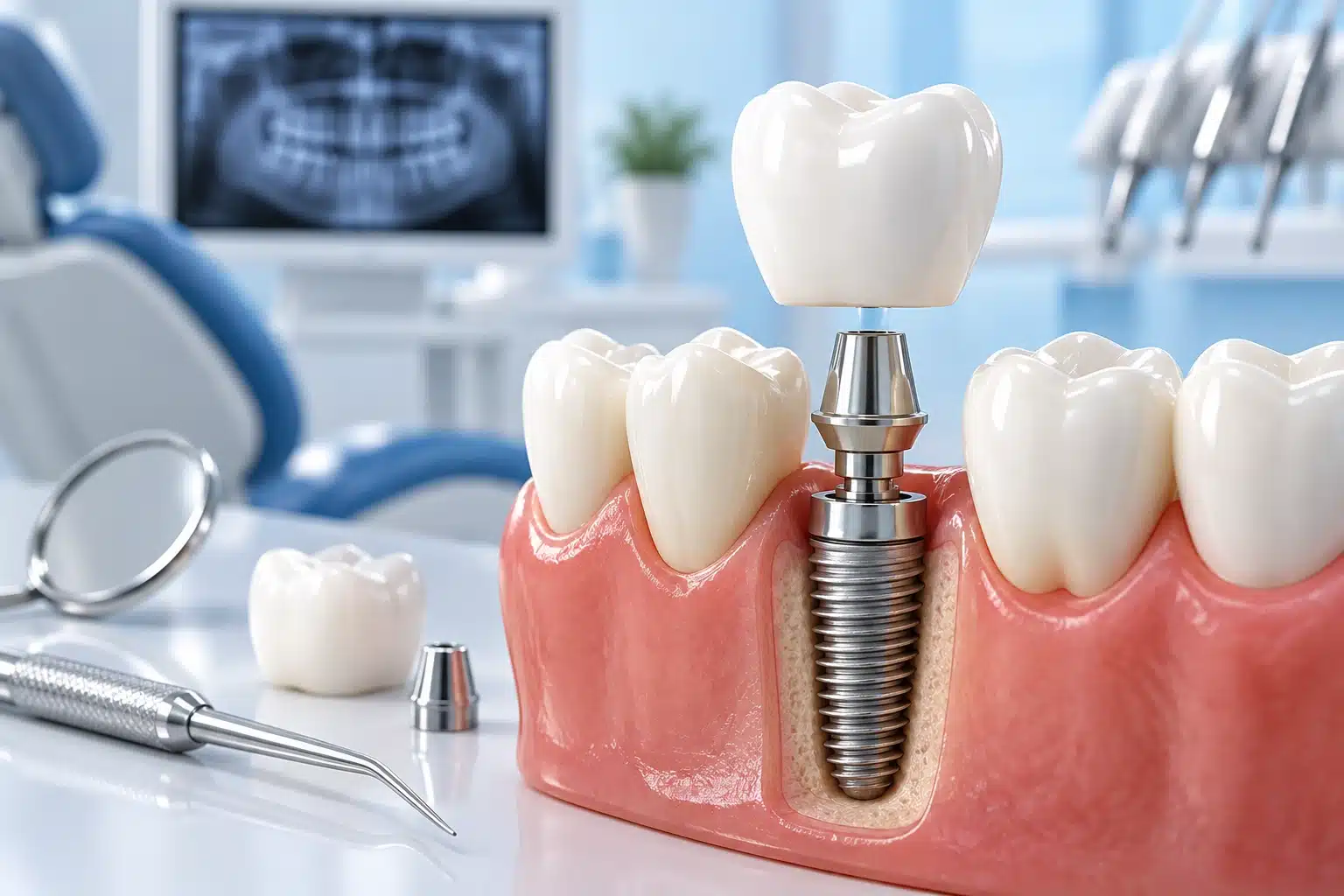
Dental implants are artificial tooth roots, usually made from biocompatible materials such as titanium, that are surgically placed into the jawbone. After the implant fixture heals and integrates with the bone, a dental abutment connects it to an implant crown or another dental prosthesis.
The process commonly involves an examination, imaging, treatment planning, implant placement, healing, abutment placement, and attachment of the replacement tooth. Some patients may need bone grafting before or during implant treatment.
1. What are dental implants?
A dental implant is a replacement for the root of a missing tooth. The implant fixture is placed into the jawbone and eventually supports an artificial tooth.
A typical single-tooth implant system includes three main components:
- Implant fixture: The portion placed inside the jawbone.
- Dental abutment: The connector between the implant and replacement tooth.
- Implant crown: The visible artificial tooth designed to restore appearance and function.
Dental implants can also support a dental bridge, implant-supported denture, overdenture, or fixed denture, depending on how many teeth are missing and the patient’s treatment plan.
2. Who is a candidate?
Not everyone with a missing tooth is automatically a candidate for dental implant surgery.
Your dentist or dental specialist will generally evaluate your jawbone, gums, remaining teeth, medical history, and overall oral health. Adequate bone is important because the implant needs a stable foundation. If there is insufficient bone, a bone graft may be recommended before implant placement.
Smoking, certain medical conditions, untreated gum disease, and factors that interfere with bone healing may affect treatment planning or healing. The FDA recommends discussing your overall health, potential benefits, risks, and candidacy with your dental provider before choosing implants.
3. How the procedure works
Dental implant procedures usually happen in stages.
Step 1: Consultation and imaging
Your dentist examines your teeth and gums and may use dental X-rays or 3D imaging to evaluate the jawbone and surrounding structures.
Step 2: Tooth removal or bone preparation
If a damaged tooth remains, it may need to be removed. Some patients require bone grafting to create a suitable foundation for the implant.
Step 3: Implant placement
During dental implant surgery, the implant fixture is placed into the jawbone. Local anesthesia, sedation, or other anesthesia options may be used depending on the procedure and patient.
Step 4: Healing
The jawbone gradually integrates with the implant in a process called osseointegration. This can take several months.
Step 5: Abutment and replacement tooth
Once healing is sufficient, the dental abutment is connected to the implant. A dentist or prosthodontist then fits the crown or another dental prosthesis.
4. How much does it cost in the U.S.?
There is no single national price for dental implants. Affordable dental implants can mean different things depending on the treatment required, and a very low advertised price may not include every component.
The final cost may include:
- Dental examination and imaging
- Tooth extraction
- Implant fixture
- Dental abutment
- Implant crown
- Bone grafting
- Temporary replacement teeth
- Laboratory fees
- Sedation or anesthesia
- Follow-up appointments
A single implant can therefore represent multiple separate services rather than one simple procedure. Ask your dentist for a written estimate showing what is included and what could create additional costs.
5. Dental insurance and financing
Dental insurance does not necessarily cover the entire cost of implants. Coverage depends on the individual plan, exclusions, annual maximums, deductibles, waiting periods, and whether specific parts of treatment are covered.
The American Dental Association provides resources on dental plans and paying for dental treatment, while Cleveland Clinic notes that dental implants are typically not completely covered by most dental insurance plans.
Patients may also ask dental offices about payment plans or financing. Before agreeing to financing, review the interest rate, payment amount, repayment period, and other terms carefully.
6. Benefits and potential risks
One major benefit of dental implants is stability. They can support replacement teeth without relying on removable denture adhesives. Implants can also help restore chewing function and appearance. The FDA lists restoration of chewing, cosmetic appearance, and support for jawbone health among potential benefits.
However, implants are still a surgical treatment and have potential risks.
Possible complications include:
- Infection
- Damage to surrounding structures
- Nerve injury
- Sinus complications with some upper-jaw implants
- Implant loosening or failure
- Problems with healing
- Difficulty cleaning around the implant
Smoking and some health conditions can affect healing and implant outcomes.
7. Recovery timeline
Recovery varies from patient to patient.
Immediately after surgery, some people experience swelling, bruising, mild bleeding, or discomfort. Dentists may recommend soft foods while the surgical site heals.
The implant itself may require several months for adequate bone integration. Cleveland Clinic notes that the overall process can take approximately six to 12 months in some cases, although timelines vary according to the patient’s condition and treatment plan.
If swelling, pain, or other symptoms become worse instead of improving, contact your dental provider.
8. Dental implants vs alternatives
Dental implants are not the only option for replacing missing teeth.
A dental bridge can replace one or more missing teeth by using neighboring teeth or implants for support. A removable denture can replace several or all missing teeth and can be taken out for cleaning.
An implant-supported denture uses dental implants to provide additional support for a denture. An overdenture is another removable replacement option that can be supported by implants.
The appropriate choice depends on factors such as the number of missing teeth, jawbone condition, oral health, budget, personal preferences, and treatment goals.
9. Questions to ask your dentist
Before starting treatment, consider asking:
- Am I a suitable candidate for dental implants?
- Do I need a bone graft?
- What will the complete treatment cost?
- Does the estimate include the implant, abutment, and crown?
- How long will my treatment take?
- What type of implant system will you use?
- What alternatives are available?
- What complications should I watch for?
- What will my dental insurance cover?
- What maintenance will I need after treatment?
The FDA specifically recommends asking about the implant system’s brand and model and keeping that information for your records.
10. FAQ based on real search questions:
Are dental implants painful?
The procedure is performed with anesthesia, and sedation may also be available. Some discomfort, swelling, bruising, or minor bleeding can occur afterward.
How long do dental implants take?
Treatment can take several months because the jawbone needs time to integrate with the implant. More complex cases may take longer.
Can anyone get dental implants?
No. Your dentist must evaluate your jawbone, gums, overall health, and other factors before determining whether implants are appropriate.
Are dental implants better than dentures?
They are different treatment options. Implants are anchored in the jawbone, while conventional removable dentures are taken out for cleaning and maintenance. Your dentist can compare the options based on your individual circumstances.
How long can dental implants last?
Cleveland Clinic states that with proper care, an implant can last a lifetime, although the crown or other components may require maintenance or replacement over time.
Final takeaway
Dental implants can provide a stable way to replace missing teeth, but the treatment involves more than simply inserting an artificial tooth. The implant fixture, abutment, crown or other dental prosthesis, healing time, possible bone grafting, and ongoing maintenance all affect the treatment plan and total cost.
If you are considering implants dental treatment in the U.S., start with a comprehensive consultation and request a complete written treatment and cost estimate before proceeding.
