
How Long Does Dengue Fever Last? A Day-by-Day Guide to Symptoms and Recovery
Dengue fever is a mosquito-borne viral illness that can cause sudden fever, severe headaches, body aches, nausea, vomiting and rash. For most people who develop symptoms, dengue lasts about 2 to 7 days, with recovery often occurring within about a week. However, the period just after the fever goes away can be important because severe dengue can develop quickly.
What Is Dengue Fever?
Dengue is caused by one of four related dengue viruses and is mainly transmitted through the bite of an infected Aedes mosquito. A person can become infected with dengue more than once because infection with one dengue virus type does not provide long-term protection against the other types.
Symptoms usually begin several days after infection. CDC clinical guidance describes an incubation period of about 5 to 7 days, although the range can vary.
Dengue Fever Day by Day
Days 1 to 3: Early Symptoms
Dengue often begins suddenly with a high fever. Early dengue symptoms may include:
- Severe headache
- Pain behind the eyes
- Muscle, bone or joint pain
- Nausea or vomiting
- Rash
- Extreme tiredness
This is generally part of the febrile phase, when fever and other symptoms are most noticeable. Fever commonly lasts 2 to 7 days.
Because these symptoms can resemble other viral infections, symptoms alone cannot reliably confirm dengue.
Days 3 to 7: The Critical Period
One of the most important points about dengue is that a person may face increased risk as the fever begins to disappear.
The critical phase generally starts around defervescence, meaning when the fever goes away, and typically lasts about 24 to 48 hours. Most people improve, but some can develop plasma leakage, bleeding or shock during this period.
Warning signs include severe abdominal pain or tenderness, persistent vomiting, bleeding from the nose or gums, blood in vomit or stool, fluid accumulation, and unusual tiredness or restlessness. Also Check : Dengue Fever Symptoms.
Do not assume that the end of the fever means the danger has completely passed.
Days 7 to 10 and Beyond: Recovery
If severe complications do not occur, the body generally begins recovering after the critical phase. Appetite and energy may gradually return, while blood counts, including platelet counts, typically begin to recover.
The recovery phase can last several more days. Some people may continue to experience weakness and fatigue even after their main dengue symptoms improve.
Why Dengue Recovery Time Can Vary
Dengue does not affect everyone in the same way. Some infections cause no symptoms, while symptomatic infections can range from mild illness to severe dengue. CDC estimates that about one in four people infected with dengue develop symptoms, and approximately one in 20 symptomatic patients develop severe dengue.
Children and adults can both develop dengue, although symptoms and complications may vary from person to person.
Dengue Diagnosis and Blood Tests
A dengue blood test is used to help confirm infection. During the first seven days of illness, healthcare providers may use molecular testing or an NS1 test, along with IgM testing. After the first week, IgM testing becomes more useful. A negative NS1 or molecular test does not always rule out dengue.
A low platelet count can occur during dengue, but platelet numbers should be interpreted by a healthcare professional along with symptoms and other laboratory findings.
Dengue Treatment and Home Care
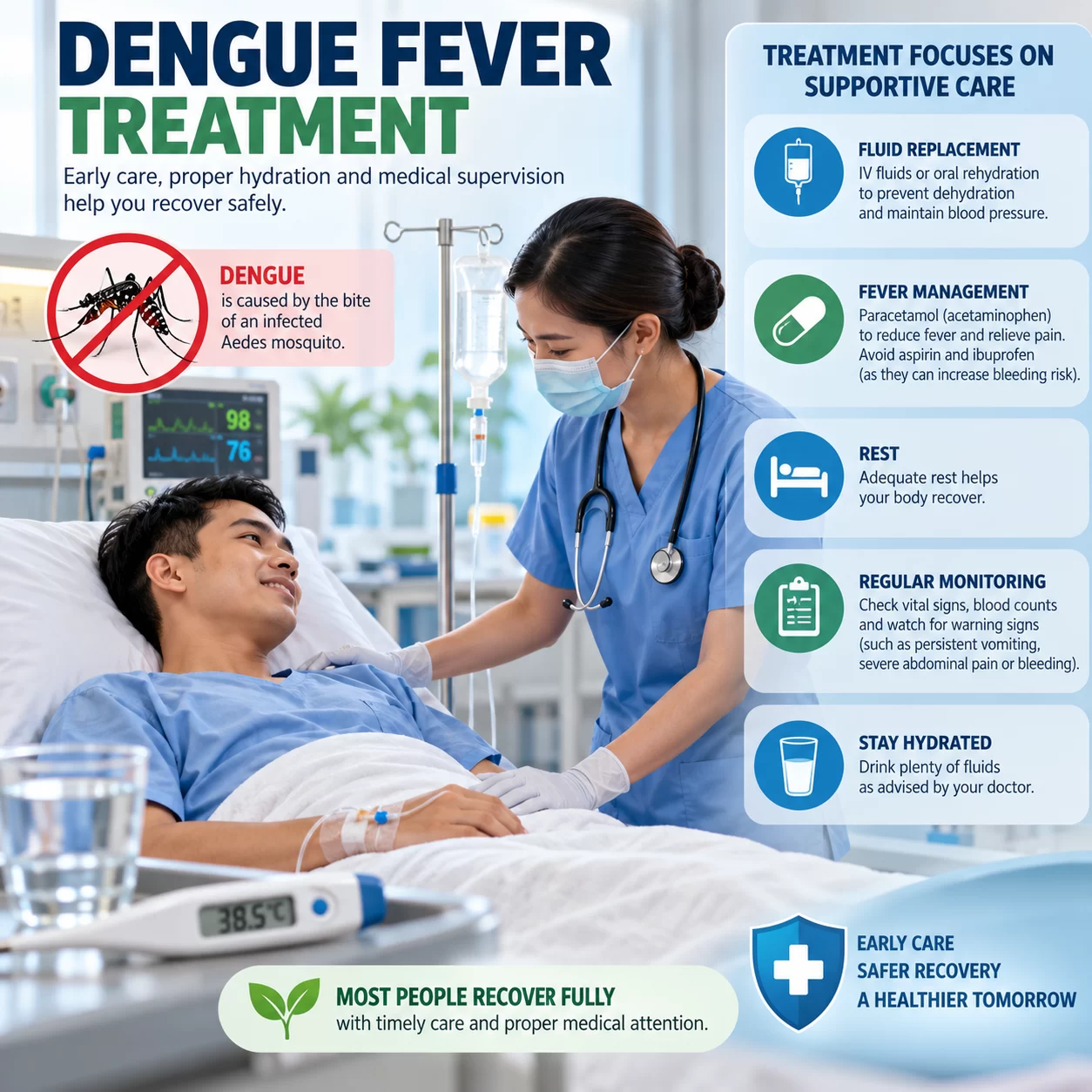
There is currently no specific antiviral treatment for dengue. Treatment focuses on supportive care, including adequate fluids, rest and monitoring for warning signs. CDC recommends acetaminophen for fever and advises avoiding aspirin and NSAIDs such as ibuprofen because of bleeding concerns.
People with suspected dengue should contact a healthcare provider, particularly if they have recently traveled to or live in an area where dengue transmission occurs.
Bottom Line
For most symptomatic patients, dengue fever lasts about 2 to 7 days, followed by a recovery period. The most important point is that the risk of severe dengue can increase around the time the fever disappears. Recognizing warning signs and seeking medical care quickly can be critical.
Dengue symptoms can overlap with other infections, so people with suspected dengue should speak with a healthcare professional for appropriate testing and care.
Frequently Asked Questions:
How long does dengue fever last?
Dengue symptoms typically last 2 to 7 days, and most people recover in about a week. Fatigue can continue during the recovery period.
What are the early symptoms of dengue?
Early symptoms commonly include fever, headache, pain behind the eyes, muscle or joint pain, nausea, vomiting and rash.
Can dengue become worse after the fever goes away?
Yes. Severe dengue can develop during the critical period after fever decreases. Warning signs require immediate medical evaluation.
How is dengue diagnosed?
Healthcare providers use blood tests based on how long symptoms have been present. NS1 antigen and molecular tests are useful during the early phase, while IgM testing becomes more useful later.
Is there a treatment for dengue?
There is no specific antiviral treatment for dengue. Medical care focuses on hydration, fever control, monitoring and prompt treatment of complications.
