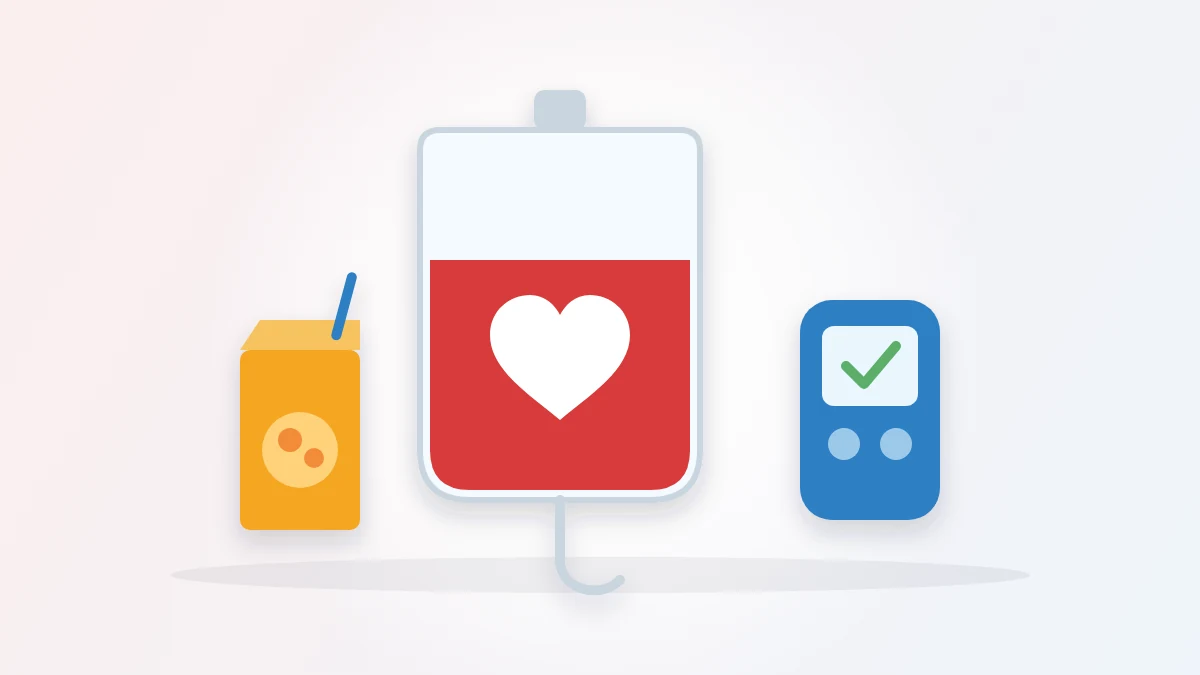
Can Diabetics Donate Blood? Red Cross Rules and 7 Tips
Donating blood is one of the simplest ways to help save lives, and many people with diabetes wonder whether they’re allowed to. Good news: in most cases, you are. Here’s what the American Red Cross says, how to prepare so your blood sugar stays steady and what to watch for afterward.
Quick answer: Can diabetics donate blood? Yes. According to the American Red Cross, people with diabetes or prediabetes are generally eligible to donate blood, platelets and plasma if they feel well and their diabetes is well managed. Taking insulin, metformin or injectable medicines such as Ozempic or Mounjaro doesn’t disqualify you.
Can Diabetics Donate Blood? The Red Cross Rules
The Red Cross says the type of diabetes medicine you take won’t disqualify you from donating as long as your diabetes is under control. That includes:
| Your situation | Can you donate? |
|---|---|
| Prediabetes | Generally yes, if you feel well |
| Type 1 or type 2 diabetes, well managed | Generally yes |
| Taking insulin (for example Humalog or Apidra) | Yes, if well managed |
| Taking metformin or other oral medicines | Yes, if well managed |
| Taking injectable medicines like Ozempic or Mounjaro | Yes, if well managed |
| Feeling unwell, or blood sugar running very high or low | Wait until you feel well and your levels are steady |
You also need to meet the usual donor requirements, such as being healthy on the day you donate and meeting age and weight minimums. If you have diabetes-related heart, blood vessel or kidney problems, check with the blood center or your doctor before you go.
How to Prepare to Donate Blood With Diabetes
The Red Cross recommends three simple steps before any donation, and they matter even more when you’re managing blood sugar:
- Eat a balanced, healthy meal before you donate. Include protein and fiber so your blood sugar stays steady.
- Drink extra fluids the day before and the day of your donation.
- Get a good night’s sleep.
It’s also smart to check your blood sugar before you leave home, take your medicines as usual unless your doctor says otherwise and bring a snack or glucose tablets in case your blood sugar dips.
What to Do After Donating
- Check your blood sugar after donating, as the Red Cross advises for people with diabetes.
- Have the snack and drink offered at the donation site.
- Rest if you need to and avoid hard exercise for the rest of the day.
- Keep drinking fluids for the next day or two.
Can Donating Blood Affect Your A1C?
It can, temporarily. A1C measures how much sugar is attached to your red blood cells over about three months. After you donate, your body makes new red blood cells, and a higher share of young cells can make your A1C read lower than your true average for a while. If you have an A1C test coming up, tell your doctor about any recent donation. Learn more about what your A1C number means.
Free A1C Screening Through Donation
The Red Cross has offered A1C testing to blood donors during special campaigns, such as in March 2025, with results available in the Red Cross Blood Donor App within one to two weeks. It uses standard cutoffs: below 5.7% is normal, 5.7% to 6.4% is prediabetes and 6.5% or higher suggests diabetes. If your result is in the prediabetes range, see how long it takes to reverse prediabetes.
Frequently Asked Questions
Can type 1 diabetics donate blood?
Yes. The Red Cross says people with diabetes, including those who use insulin, are generally eligible if they feel well and their diabetes is well managed.
Can I donate blood if I take insulin?
Yes. According to the Red Cross, taking insulin doesn’t disqualify you, as long as your diabetes is under control.
Can I donate plasma or platelets with diabetes?
Yes. The Red Cross says people with diabetes are generally eligible to donate blood, platelets and plasma when their diabetes is well managed.
Will donating blood lower my blood sugar?
Donating doesn’t directly lower blood sugar, but skipping meals or not drinking enough can make you feel unwell. Eat a balanced meal beforehand and check your glucose afterward.
Does donating blood affect A1C results?
It can make A1C read lower for a while, because your body replaces the lost red blood cells with new ones. Tell your doctor if you donated recently before an A1C test.
The Bottom Line
Can diabetics donate blood? Yes. If your diabetes is well managed and you feel well, you can usually donate blood, platelets and plasma, whether you use insulin, metformin or injectable medicines. Eat a balanced meal, drink extra fluids, sleep well and check your blood sugar afterward. If you have complications or questions, talk with your doctor or the blood center first.
Sources
- Diabetes and Blood Donation, American Red Cross
- A1C testing for blood donors, American Red Cross
Sources accessed October 7, 2026. This article is general information and isn’t a substitute for advice from your doctor.
