
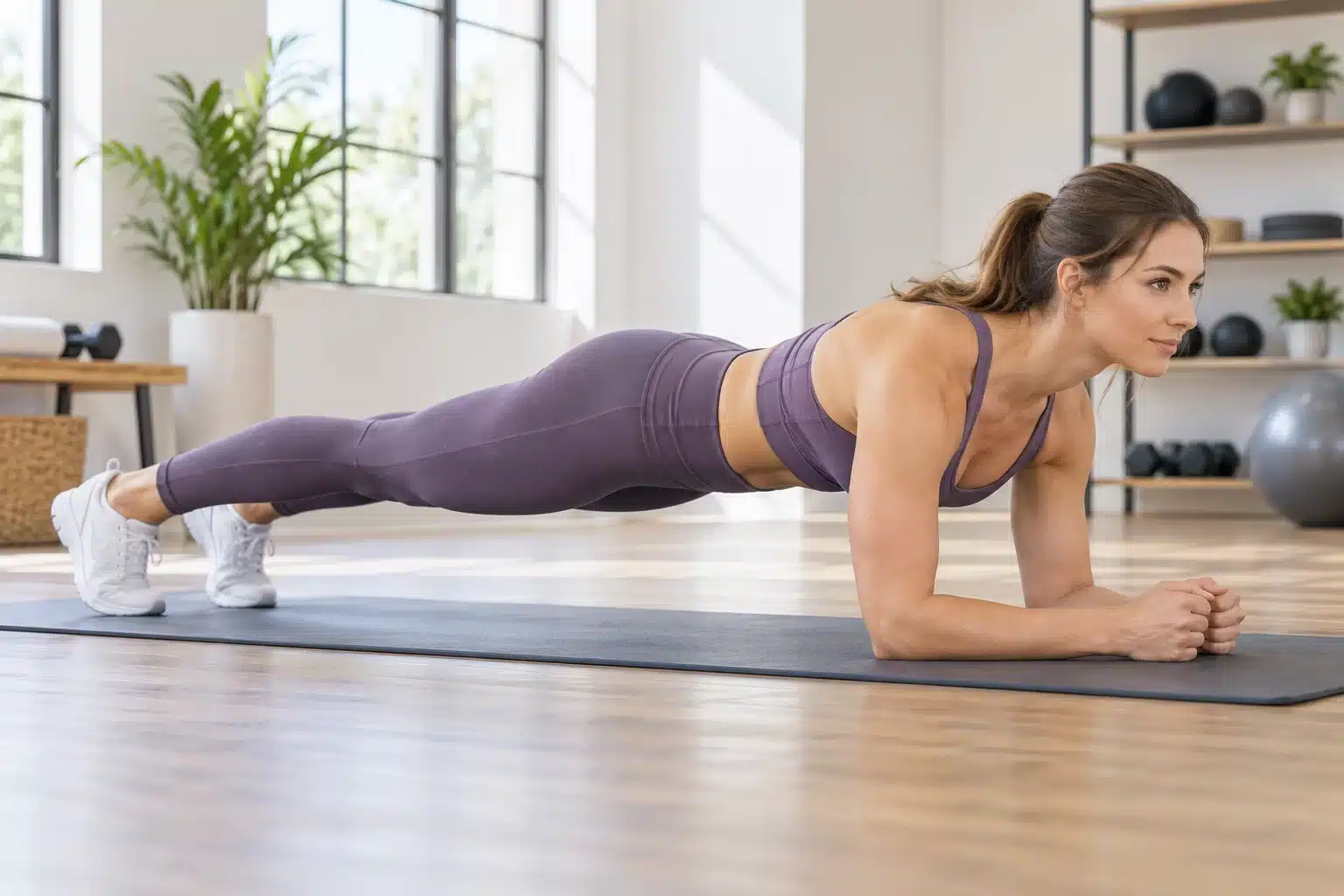
15 Benefits of Daily Planks: How This Simple Exercise Supports Your Fitness
You do not need expensive equipment to challenge your core. A plank uses your body weight to train the muscles that help keep you stable. With consistent practice and proper technique, this simple exercise can complement a balanced fitness routine.
Daily planks can suit some people, but everyday practice is optional. Alternate-day sessions also work, especially when your muscles need recovery. Here are 15 benefits and practical advantages of making planks part of your routine.
1. Builds Core Strength
Planks challenge your abdominal muscles and other core stabilizers, helping you develop strength around the middle of your body.
2. Improves Muscular Endurance
Holding a steady position trains muscles to sustain effort. Progress means maintaining good alignment comfortably, rather than chasing longer times.
3. Develops Trunk Stability
Your core works to prevent your torso from moving unnecessarily. Planks practise this stabilizing role while your limbs support your weight.
4. Trains Abdominal Bracing
Planking helps you practise tightening your midsection while breathing. This skill is useful during lifting and other strength exercises.
5. Supports Everyday Movement
A stronger core helps provide a stable foundation when you bend, carry groceries or get up from the floor.
6. Encourages Posture Awareness
Maintaining alignment teaches you to notice your body position. Planks alone will not correct posture, but that awareness can carry into daily activities.
7. Supports Your Back During Tasks
Learning to brace your core can help support your spine during activities such as lifting a child or unloading the dishwasher.
8. Engages Multiple Muscle Groups
Planks involve more than your abs. Your shoulders, back, hips and legs also contribute to keeping your body steady.
9. Practises Whole-Body Coordination
Holding the position requires several muscle groups to work together. You learn to maintain tension without letting your hips sag or rise.
10. Builds a Foundation for Other Exercises
Core stability supports controlled movement during workouts. Planks can complement exercises that require a steady torso, including squats and presses.
11. Requires No Special Equipment
A clear floor space is enough to begin. A mat can make forearm contact more comfortable, but gym equipment is unnecessary.
12. Fits Into Short Sessions
A few controlled holds fit easily into a busy schedule. This convenience can make regular exercise feel more manageable.
13. Offers Beginner-Friendly Modifications
You can start against a sturdy counter or with your knees supported. Choose a version that allows steady breathing and comfortable alignment.
14. Allows Gradual Progression
As your control improves, you can adjust the hold or explore suitable variations. Progress gradually rather than sacrificing technique.
15. Creates Achievable Fitness Goals
Completing a comfortable hold with better form provides a clear milestone. Small improvements can make practice encouraging and rewarding.
How to Start Safely
Begin with short holds, keeping your elbows beneath your shoulders and your body aligned. Breathe steadily and stop when technique slips or pain occurs. Rest when sore. Planks strengthen muscles, but they do not specifically burn belly fat or replace cardio and full-body strength training.