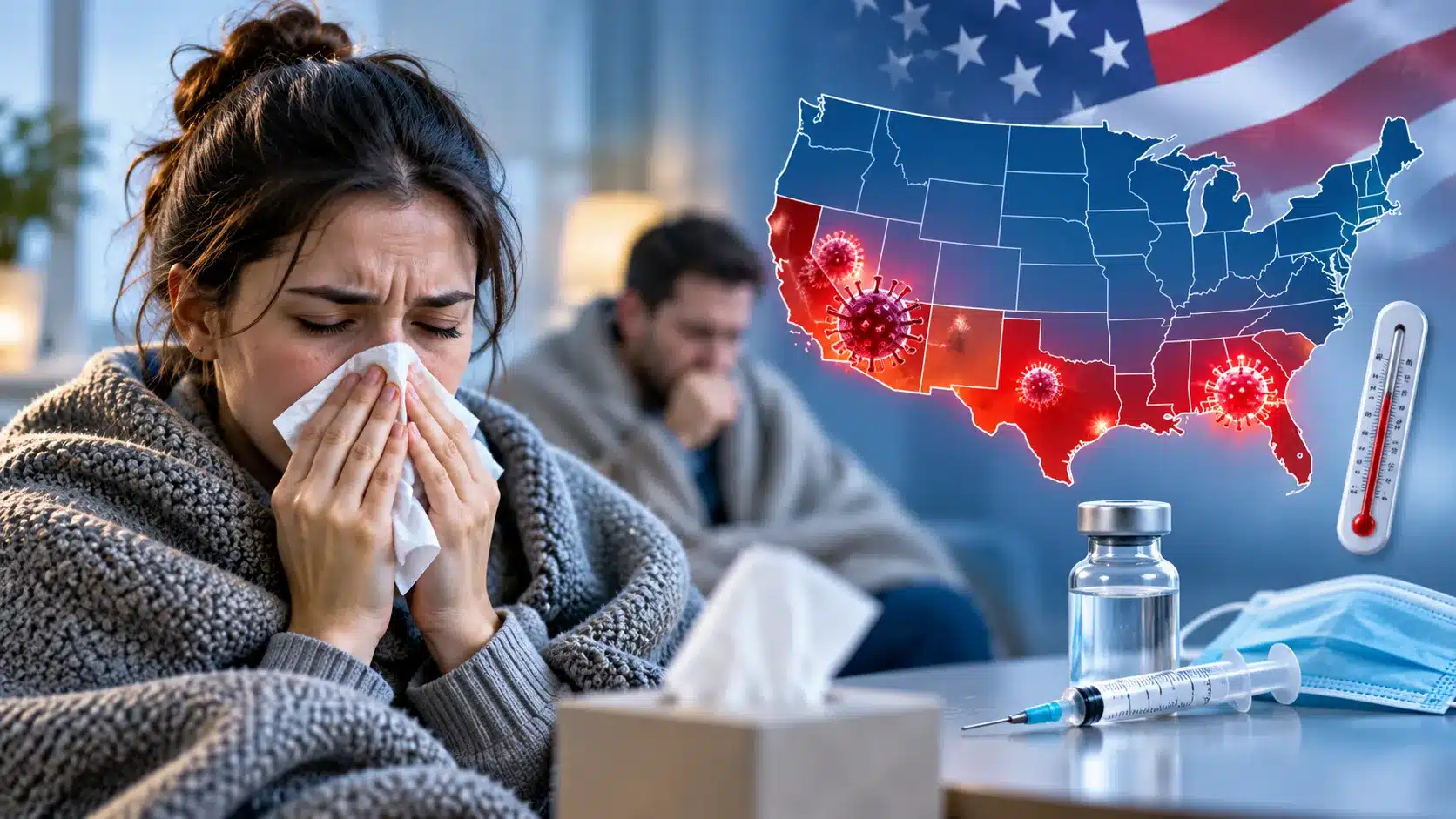
US Flu Season Starts Early as Cases Rise Across South and West
The US flu season 2026 is off to an unusually early start. The CDC’s latest FluView report, published November 13, estimates at least 2.6 million flu illnesses, 36,000 hospitalizations, and 2,100 deaths since early October. Seven states, mostly in the South and West, now report high or very high activity, and two more children have died, bringing the season’s pediatric toll to five. Here is what the data shows, which strains are circulating, and how to protect your family heading into the holidays.
CDC Reports 2.6 Million Flu Illnesses and 2,100 Deaths
The CDC FluView for Week 44 (the week ending November 7, 2026) shows flu activity “higher than typically observed at this time of year.” Key figures:
- Estimated burden, season to date: at least 2.6 million illnesses, 36,000 hospitalizations, and 2,100 deaths.
- Outpatient visits: 3.2% were for influenza-like illness (ILI), above the national baseline of 2.9%.
- Lab positivity: 11.3% of clinical lab specimens tested positive for flu, up from 9.1% the week before.
- Pediatric deaths: five so far this season, two of them reported this week.
These numbers measure different things. The 2.6 million illnesses, 36,000 hospitalizations, and 2,100 deaths are modeled estimates: the CDC uses surveillance data to estimate the true burden, since most people with flu are never tested. They are not laboratory-confirmed case counts. The five pediatric deaths, by contrast, are individually reported and confirmed. ILI is a symptom-based measure that can include other viruses, while lab positivity reflects confirmed flu tests.
Despite the early rise, the CDC currently rates the season’s severity as low for all age groups.
Why Is the 2026–27 Flu Season Starting So Early?
Flu season usually ramps up in December or January. This year, signs of increased activity appeared in some regions as early as September, and national indicators climbed through October.
Experts say several factors may be at play, and no single cause has been proven:
- Circulating strains: Influenza A(H1N1) is dominating early. Some researchers have pointed to genetic changes in H1N1 that could help it spread among people with partial immunity, though this is still being studied.
- Population immunity: Immunity from past infections and vaccines wanes over time, leaving more people susceptible.
- School and indoor activity: Classrooms and cooler weather bring people together indoors.
- Travel: Movement between regions can seed outbreaks quickly.
The CDC stresses that an early start does not necessarily mean a higher peak or a worse season overall.
Seven States Report High Influenza Activity
According to CIDRAP’s summary of the CDC data, seven states had high or very high ILI activity in Week 44:
- South: Louisiana, Texas, Tennessee, and South Carolina.
- West: California, Oregon, and Washington.
Moderate activity was reported in Colorado, Florida, Hawaii, Idaho, Massachusetts, New Jersey, New Mexico, New York State, and Puerto Rico. Most of the rest of the country remains at minimal or low levels.
Keep in mind that ILI activity levels track people visiting doctors with fever plus cough or sore throat. Those visits can be caused by flu, COVID-19, RSV, or other viruses, so ILI levels are not confirmed flu case counts.
Louisiana and Southern States See Rising Flu Cases
Louisiana has drawn attention as one of the earliest hot spots. By late October, the state’s flu test positivity was 8.3%, compared with a national average of 5.7%, Axios reported, and emergency room visits for respiratory illness were climbing.
Southern states often see flu activity earlier than the rest of the country, and Louisiana has led early surges in past seasons too. Health officials there have urged residents to get vaccinated before activity rises further. Texas, Tennessee, and South Carolina have followed with high activity levels.
Two More Children Die as Pediatric Flu Deaths Reach Five
The CDC reported three new pediatric flu deaths in its Week 44 update. Two occurred during the 2026–27 season, bringing this season’s total to five. The third occurred during the 2025–26 season, which now has 203 reported pediatric flu deaths.
The CDC did not release details about the children. Pediatric flu deaths are often reported weeks after they occur because they require investigation and lab confirmation, so numbers can change as reports come in.
Many children who die from flu were not vaccinated, and some had no underlying health conditions. The CDC has long recommended annual flu vaccination for children six months and older.
Flu Hospitalizations Increase Across the United States
Hospitals reported 9,584 flu-associated admissions in Week 44, a rate of 2.8 per 100,000 people, through the CDC’s National Healthcare Safety Network. Separately, the FluSurv-NET network counted 3,262 lab-confirmed hospitalizations from October 4 to November 7.
These reported admissions are different from the CDC’s modeled estimate of 36,000 hospitalizations, which adjusts for undertesting and incomplete reporting.
Rising flu admissions can strain emergency departments, pediatric units, and clinics, especially when other respiratory viruses also circulate. People at higher risk of severe flu include:
- Adults 65 and older.
- Children under 5, especially under 2.
- Pregnant people.
- People with chronic conditions such as asthma, diabetes, heart disease, or weakened immune systems.
If you live with diabetes, see our guide to diabetes management.
Which Influenza Strains Are Circulating?
Influenza viruses fall into two main types that cause seasonal epidemics. Influenza A includes subtypes such as H1N1 and H3N2 and tends to drive larger outbreaks. Influenza B often circulates later in the season.
This season, influenza A dominates. In Week 44, public health labs found 670 influenza A specimens and only 10 influenza B. Of the influenza A viruses subtyped, 98.9% were A(H1N1)pdm09, the strain descended from the 2009 pandemic virus. Only 1.1% were H3N2.
Scientists are tracking genetic changes in the circulating H1N1 viruses. Some variation from vaccine strains is normal every year. There is currently no evidence that this season’s H1N1 is unusually dangerous or resistant to the vaccine. No novel influenza virus has been confirmed in people this week.
Is the 2026–27 Flu Vaccine Effective Against H1N1?
The CDC says it is too early to know which viruses will predominate or whether there could be implications for vaccine effectiveness this season. This year’s vaccine includes an H1N1 component.
Vaccine effectiveness is measured with real-world studies that compare vaccination rates between people who test positive and negative for flu. Interim estimates usually come out in winter.
Genetic differences between circulating viruses and vaccine strains do not automatically mean the vaccine will fail. Even partial matches typically reduce the risk of severe illness, hospitalization, and death.
Who Should Get a Flu Shot This Season?
The CDC recommends an annual flu vaccine for nearly everyone six months and older. Specific guidance includes:
- Young children: Children 6 months to 8 years who are getting vaccinated for the first time, or who have had only one dose before, need two doses at least four weeks apart.
- Adults 65 and older: Higher-dose or adjuvanted vaccines are preferred when available.
- Pregnancy: Vaccination is recommended during any trimester and helps protect newborns too young to be vaccinated.
- Chronic conditions: People with heart, lung, kidney, or metabolic disease benefit greatly from vaccination.
- If you’ve already been sick: Having a flu-like illness doesn’t mean you’re immune to all circulating strains. Vaccination is still recommended.
It is not too late. Protection develops about two weeks after vaccination, and flu often circulates into spring.
Could Thanksgiving Travel Increase Flu Transmission?
Holiday travel and family gatherings bring people together indoors, which can help respiratory viruses spread. That does not mean Thanksgiving will necessarily cause a specific rise in cases, but some simple steps can lower your risk:
- Get vaccinated now so protection builds before you travel.
- Stay home if you’re sick, and keep sick children home.
- Wash hands often and cover coughs.
- Consider extra care around older relatives, babies, and people with weakened immunity.
- Improve ventilation at gatherings when possible.
How Does This Flu Season Compare With Last Year?
The 2025–26 season was severe, with more than 200 pediatric deaths reported. Preliminary estimates for last season cited in news reports were roughly 32 million illnesses, 380,000 hospitalizations, and 24,000 deaths; final CDC figures may differ.
This season’s early numbers are higher than usual for November, but early indicators are a poor predictor of final severity. A season can start early and peak early, or start fast and then level off.
Common Flu Symptoms and Serious Warning Signs
Flu usually comes on suddenly. Common symptoms include:
- Fever or chills.
- Cough and sore throat.
- Runny or stuffy nose.
- Muscle aches, headache, and fatigue.
- Vomiting or diarrhea, more common in children.
These symptoms overlap with COVID-19, RSV, and colds, so testing is the only way to know for sure. Our guide explains how to tell cold, flu, COVID and RSV apart.
Complications can include pneumonia, dehydration, worsening of chronic conditions, and respiratory failure. Seek emergency care for:
- In children: fast or labored breathing, bluish lips, chest pain, dehydration (no urine for 8 hours), severe muscle pain, seizures, or fever above 104°F.
- In adults: difficulty breathing, persistent chest or abdominal pain, confusion, seizures, severe weakness, or symptoms that improve and then return worse.
Flu Treatment, Antivirals and Prevention
Prescription antiviral drugs such as oseltamivir (Tamiflu) can shorten illness and reduce complications. They work best when started within 48 hours of symptoms, but the CDC recommends them for hospitalized and high-risk patients even later.
Antivirals require a doctor’s evaluation and are not a substitute for vaccination. If you’re at higher risk and develop flu symptoms, contact your health care provider promptly.
What the CDC Says About the Weeks Ahead
The CDC reports that flu is rising while COVID-19 and RSV activity remain low in several measures. Wastewater data show COVID at moderate levels in much of the country and RSV very low. Other viruses, such as rhinovirus, enterovirus, and adenovirus, are elevated.
Each virus is tracked separately because they peak at different times. Key questions for the coming weeks include when flu will peak, whether H1N1 remains dominant, how heavily hospitals are affected, and how well the vaccine performs. Experts say it is too early to know whether this will be a mild or severe season.
Frequently Asked Questions
How many people have had the flu in the US this season?
The CDC estimates at least 2.6 million flu illnesses as of the week ending November 7, 2026. This is a modeled estimate, not a count of confirmed cases.
Why is flu season early this year?
Experts point to dominant H1N1 viruses, waning immunity, school and indoor gatherings, and travel. No single cause has been confirmed.
Which states have the most flu right now?
Louisiana, Texas, Tennessee, South Carolina, California, Oregon, and Washington reported high or very high activity in mid-November.
How many children have died from flu this season?
The CDC has reported five pediatric flu deaths in the 2026–27 season as of November 13.
Is it too late to get a flu shot?
No. The CDC recommends vaccination as long as flu is circulating, and protection develops in about two weeks.
Does the flu vaccine work against H1N1 this year?
The vaccine includes an H1N1 component. The CDC says it is too early to measure this season’s effectiveness.
Conclusion
The 2026–27 influenza season has arrived early, led by H1N1 and concentrated in the South and West. The current numbers call for preparation, not panic: severity is still rated low, and the season’s course is uncertain. Getting vaccinated, staying home when sick, and seeking early treatment if you’re at high risk remain the best ways to stay healthy through the holidays.
Find more evidence-based health guides on Learning Joan.
