
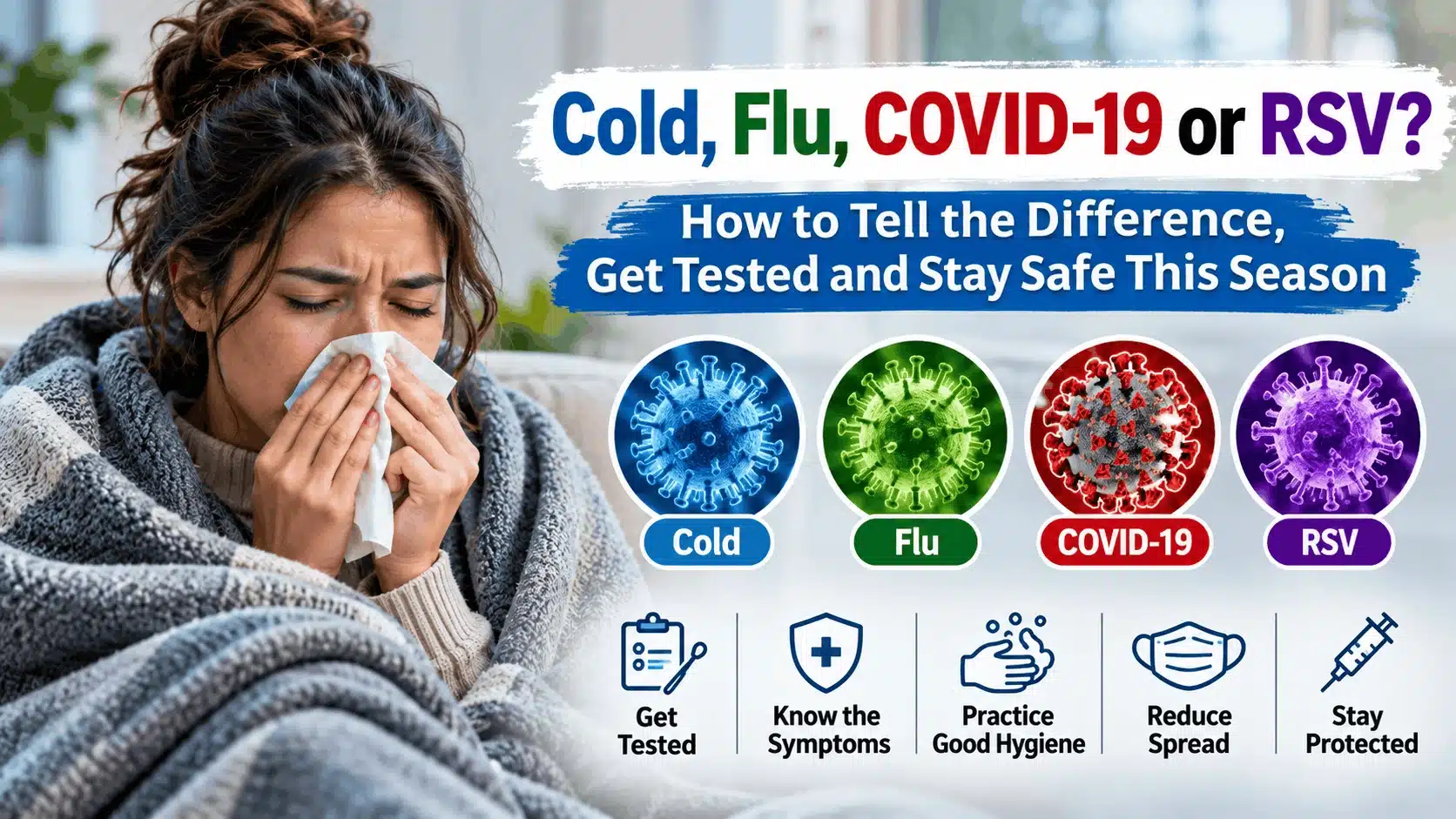
Cold, Flu, COVID-19 or RSV? How to Tell the Difference, Get Tested and Stay Safe This Season
Published November 9, 2026
A scratchy throat, a stuffy nose and a cough that won’t quit: every fall and winter, millions of people wake up with these symptoms and wonder what they have. Is it a cold, the flu, COVID-19 or RSV? These four infections spread most easily when people gather indoors in cooler months, and they often look alike in the first few days. Knowing how they differ, when testing helps and which warning signs need urgent care can help you protect yourself and the people around you.
Why Respiratory Virus Season Matters
Respiratory viruses circulate year-round, but activity usually rises from fall through early spring. People spend more time indoors, and kids return to school. Some viruses also survive better in cold, dry air. When flu, COVID-19 and RSV spread at the same time, clinics and hospitals can fill up quickly, especially with very young children and older adults.
The Centers for Disease Control and Prevention (CDC) tracks these viruses each season. It encourages people to know the basics of prevention, testing and treatment before they get sick.
Understanding the Four Major Respiratory Infections
The common cold
Colds are caused by more than 200 viruses, most often rhinoviruses. Symptoms usually start gradually and stay mild: runny or stuffy nose, sneezing, sore throat and a light cough. Most people recover in 7 to 10 days. Complications are uncommon, but a cold can trigger asthma flare-ups, sinus infections or ear infections, especially in children.
Influenza (flu A and flu B)
Seasonal flu is caused by influenza A and B viruses. Flu tends to come on suddenly, with fever, chills, body aches, headache, fatigue and a dry cough. Influenza A strains usually drive the biggest seasonal waves. Influenza B can also cause serious illness, particularly in children. Possible complications include pneumonia, worsening of chronic conditions, and, rarely, inflammation of the heart, brain or muscles.
COVID-19
COVID-19 is caused by the SARS-CoV-2 virus. Symptoms range from none at all to severe. They may include fever, cough, sore throat, congestion, fatigue, headache, muscle aches and shortness of breath. Loss of taste or smell is less common than earlier in the pandemic, but it still happens. Some people develop pneumonia or blood clots, and some have lingering symptoms known as Long COVID. For a closer look at current symptoms, see our guide to COVID symptoms in 2026.
Respiratory syncytial virus (RSV)
RSV usually causes cold-like symptoms in healthy older children and adults. In infants, it is the leading cause of hospitalization in the U.S., according to the CDC. It can inflame the small airways (bronchiolitis) or the lungs (pneumonia). In babies, watch for poor feeding, fussiness, wheezing and fast or labored breathing. Older adults and people with heart or lung disease are also at higher risk of severe RSV.
How to Recognize the Differences
This chart shows typical patterns. Individual cases vary widely.
| Symptom | Cold | Flu | COVID-19 | RSV |
|---|---|---|---|---|
| Onset | Gradual | Sudden | Gradual or sudden | Gradual |
| Fever and chills | Rare | Common, often high | Common | Sometimes, usually low |
| Cough | Mild | Common, dry | Common | Common; may wheeze |
| Runny or stuffy nose | Very common | Sometimes | Common | Very common |
| Sore throat | Common | Sometimes | Common | Sometimes |
| Fatigue and body aches | Mild | Common, often intense | Common | Mild to moderate |
| Headache | Uncommon | Common | Common | Uncommon |
| Breathing difficulty | Rare | Possible in severe cases | Possible | Possible, especially in infants and older adults |
Why symptoms alone can’t tell you which virus you have
These illnesses overlap too much to diagnose by symptoms. A mild case of flu can feel like a cold, and COVID-19 can look like almost anything. It’s also possible to have two viruses at once. Because treatments differ, and some work only when started early, testing gives you far better information than guessing.
Other Respiratory Viruses to Know
Many other viruses cause cold-like illness, and most standard home tests don’t detect them:
- Rhinoviruses: the most common cause of colds; can trigger asthma attacks.
- Adenoviruses: can cause colds, pink eye, sore throat, bronchitis and stomach symptoms.
- Human parainfluenza viruses: a common cause of croup in young children, along with bronchiolitis and pneumonia.
- Seasonal coronaviruses (different from SARS-CoV-2): usually cause mild colds.
- Human metapneumovirus: similar to RSV, and can cause significant illness in young children and older adults.
So a negative result for COVID-19, flu and RSV doesn’t mean you aren’t contagious or that nothing is wrong.
Why Respiratory Virus Testing Matters
Testing helps you and your clinician decide on treatment, how long to stay away from others, and whether vulnerable people in your home need extra protection.
- At-home rapid tests: antigen tests give results in minutes. They’re widely available for COVID-19, and combination versions now also detect flu and, in some cases, RSV.
- COVID-19 testing: if a home antigen test is negative but you have symptoms, the FDA advises repeating it after 48 hours, because early infections can be missed.
- Influenza testing: rapid flu tests are available at home and in clinics. Doctors may treat high-risk patients with flu antivirals based on symptoms during flu season, without waiting for a test.
- RSV testing: most often done in clinics or hospitals, especially for infants, older adults and people with severe symptoms.
- Laboratory (PCR or molecular) tests: more sensitive than rapid tests. Clinicians may order them when results will change treatment, when symptoms are severe, or when a rapid test doesn’t match the clinical picture. Some lab panels check for many viruses at once.
Understanding Four-in-One Rapid Tests
Combination home tests detect COVID-19, influenza A, influenza B and RSV from a single nasal swab, usually within about 15 to 30 minutes. In January 2026, the first FDA-cleared at-home rapid antigen test covering all four viruses became available at retail, according to Patient Care. It is cleared for use in people as young as 6 months, with an adult collecting the sample for young children.
Benefits
- One swab and one wait instead of several tests.
- Quick answers that can help you decide whether to call a doctor early. That matters because flu and COVID-19 antivirals work best when started soon after symptoms begin.
Limitations
- False negatives are possible, especially early in illness or if the swab is done incorrectly. Antigen tests are less sensitive than lab PCR tests.
- They detect only four viruses. Rhinovirus, adenovirus and other causes won’t show up.
- A positive result is usually reliable, but it isn’t a full diagnosis. You could still have a bacterial infection or a second virus.
Reading results correctly
Follow the manufacturer’s instructions exactly: how deep to swab, how long to wait and how to read faint lines. If the result is negative but you’re still sick or getting worse, retest as directed or contact a healthcare provider. Never let a negative home test stop you from seeking care for warning signs.
Treatment Options
Flu: antiviral medications
Prescription antivirals such as oseltamivir (Tamiflu), baloxavir (Xofluza) and zanamivir (Relenza) can shorten flu illness and lower the risk of complications. They work best when started within 48 hours of symptoms. The CDC recommends prompt antiviral treatment for anyone hospitalized with flu and for people at higher risk of complications, even if they seek care later.
COVID-19: antivirals for higher-risk people
For people at higher risk of severe disease, oral nirmatrelvir with ritonavir (Paxlovid) or molnupiravir, or intravenous remdesivir, can reduce the chance of hospitalization. Oral treatments are generally started within 5 days of symptom onset. Paxlovid interacts with many common medications, so tell your clinician everything you take.
Common cold: supportive care
There’s no antiviral treatment for colds. Rest, fluids, saline rinses, honey for cough in people over age 1, and over-the-counter symptom relievers can help. Antibiotics don’t treat viruses and can cause side effects.
RSV management
Most RSV infections are treated with supportive care. Severe cases, particularly in infants and older adults, may need hospital care such as oxygen or IV fluids. Prevention is the main medical tool for RSV (see below).
Rest, hydration and symptom relief
For any of these illnesses, rest and staying hydrated help your body recover. Fever reducers such as acetaminophen or ibuprofen can ease discomfort when used as directed. Never give aspirin to children or teens with viral illness, because of the risk of Reye’s syndrome.
Why early medical consultation matters
If you or a family member is at higher risk, contact a healthcare provider as soon as symptoms start. Many clinics offer telehealth visits, and testing early can mean starting treatment while it’s most effective.
Who Faces a Higher Risk?
- Infants and young children: especially babies under 6 months, premature infants and children with heart or lung conditions. RSV and flu are particular concerns.
- Older adults: risk rises with age, particularly after 65 and more so after 75.
- People with weakened immune systems: including those on chemotherapy, transplant recipients and people taking immune-suppressing drugs.
- People with chronic conditions: such as heart disease, COPD, asthma, diabetes, kidney disease or obesity.
- Pregnant people: who face higher risks from flu and COVID-19.
When to Seek Medical Attention
Call 911 or go to an emergency room for:
- Difficulty breathing or shortness of breath
- Persistent chest pain or pressure
- New confusion, trouble waking up or reduced responsiveness
- Bluish or gray lips, skin or nail beds
- Seizures
- In babies: pauses in breathing, ribs pulling in with each breath, or very poor feeding
Contact a healthcare provider promptly for:
- Signs of dehydration, such as little or no urine, dry mouth, dizziness, or no wet diapers in 8 hours for infants
- Symptoms that improve and then return or get worse, which can signal a secondary infection
- High or persistent fever
- Worsening of a chronic condition such as asthma, heart failure or diabetes
Prevention During Respiratory Virus Season
- Wash your hands with soap and water for at least 20 seconds, or use an alcohol-based hand sanitizer.
- Cover coughs and sneezes with a tissue or your elbow.
- Clean frequently touched surfaces, such as doorknobs, phones and counters, especially when someone at home is sick.
- Stay home when sick until symptoms are improving and you’ve been fever-free for at least 24 hours without medication, in line with the CDC’s respiratory virus guidance.
- Improve indoor ventilation by opening windows when practical, using air purifiers with HEPA filters, or running HVAC fans.
- Stay up to date on vaccines. Flu, COVID-19 and RSV vaccines, along with RSV antibody products for infants, are available for eligible groups. Recommendations vary by age, pregnancy and health status, and they have changed in recent seasons, so ask your doctor or pharmacist which are right for you and your family.
- Take extra care around vulnerable people. Consider testing before visiting a newborn or an older relative, and wear a well-fitting mask in crowded indoor spaces if you’re at high risk or have symptoms.
General health habits support your immune system, too: regular sleep, physical activity and routine care. Your annual physical is a good time to review your vaccines.
Conclusion
Colds, flu, COVID-19 and RSV can feel nearly identical at first, but they aren’t the same illness, and the differences matter. Some respond to antivirals that work best when started early. Others mainly need rest and time. RSV and flu can be especially serious for babies and older adults. Home tests, including newer four-in-one kits, make it easier to get quick answers, but they have limits and can’t replace a professional evaluation. If you’re at higher risk, your symptoms are getting worse, or you notice any emergency warning signs, contact a qualified healthcare professional rather than relying on symptoms or a home test alone.
Find more evidence-based health guides on Learning Joan.
This article is for general information only and is not a substitute for professional medical advice, diagnosis or treatment.