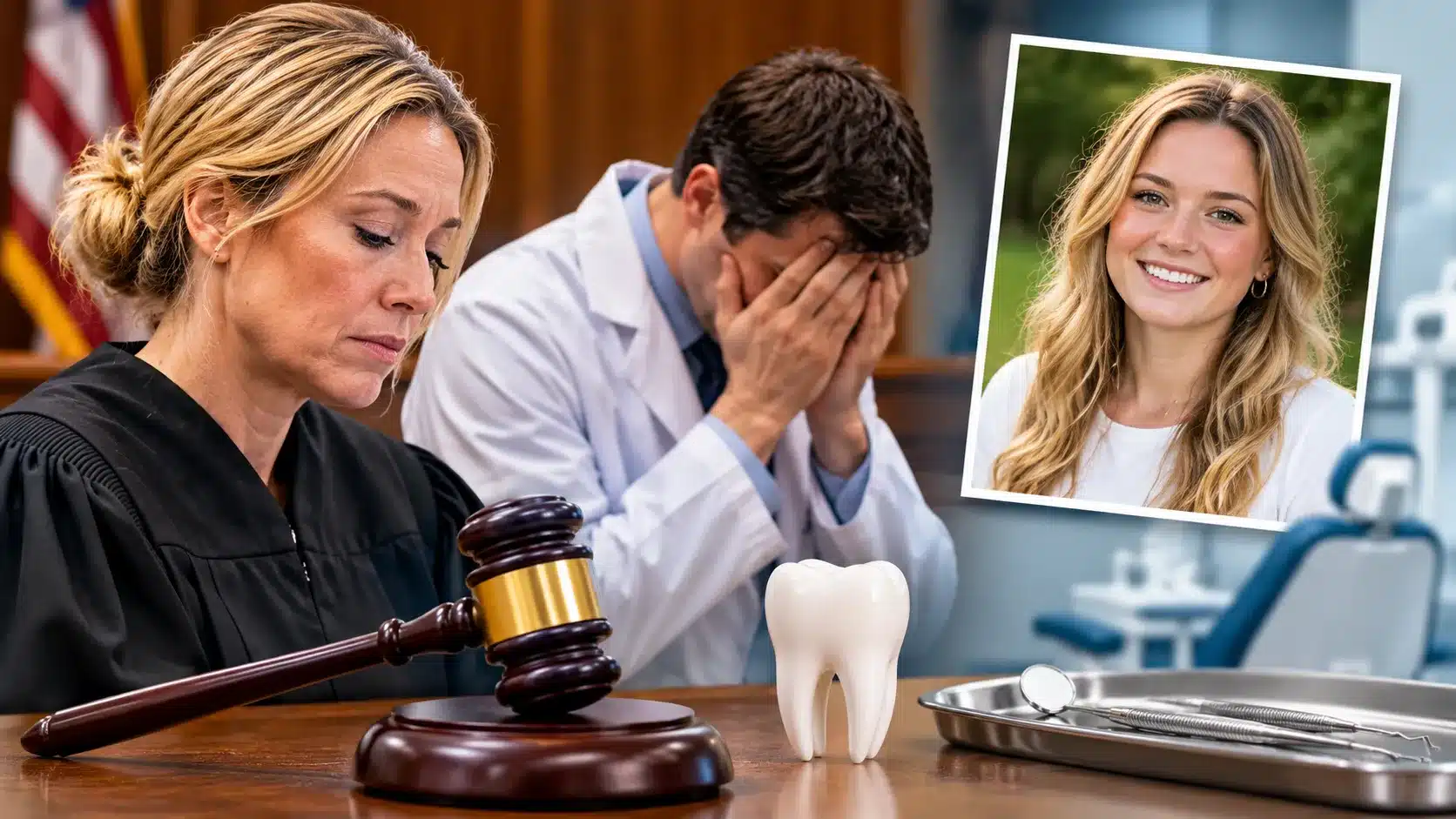
Virginia Blatz Dental Death Case: Dentist Pleads Guilty as Family Seeks Accountability
A Manitoba dentist has pleaded guilty to professional misconduct in connection with the 2024 death of Virginia Blatz, a 23-year-old who died after a wisdom-tooth appointment in Morden. At a Manitoba Dental Association inquiry hearing in Winnipeg on November 23, 2026, Dr. Ronald Janz admitted giving her far more local anesthetic than recommended and failing to recognize and properly treat a toxic reaction. The panel has not yet decided on a penalty. Meanwhile, Virginia’s family says the process has left key questions unanswered.
What Happened to Virginia Blatz?
Virginia Blatz, of Morris, Manitoba, went to Boundary Trails Dental Centre in Morden on November 27, 2024, to have four wisdom teeth removed. During the appointment, she experienced a medical emergency after receiving local anesthetic. She was taken to hospital and pronounced dead later that day.
Her death led to an investigation by the Manitoba Dental Association, the body that regulates dentists in the province, and to a civil lawsuit by her family.
Dentist Admits Professional Misconduct
At the inquiry hearing, held at a downtown Winnipeg law firm, Janz pleaded guilty to charges under Manitoba’s Dental Association Act, CBC News reported.
The charges included breaching the association’s code of ethics, specifically its principles to do no harm, to improve the patient’s condition and to provide competent care. He was also charged with professional misconduct. CTV News reported that the contraventions included displaying a lack of knowledge.
A guilty plea in a regulatory inquiry is not a criminal conviction. It is an admission that a professional fell short of the standards set by their regulator. No criminal charges have been reported in this case.
What the Inquiry Heard About the Anesthetic Dosage
According to an agreed statement of facts read at the hearing, Janz far exceeded the recommended dose of articaine, a common local anesthetic used to numb the mouth during dental work.
Reports describe the amount differently:
- CTV News reported the inquiry heard Blatz received up to 200 per cent of the recommended dose based on her weight.
- Other coverage of the hearing reported that she should have received no more than four cartridges of anesthetic, and that a report concluded she received 10.
These figures may reflect different ways of measuring the dose, such as the amount intended versus the amount actually delivered, or different calculations based on her weight. Her exact weight and the precise milligram amounts were not available in the reports reviewed. Until the panel publishes its written decision, readers should treat the specific figures with caution.
The agreed facts also said Janz told the investigator he did not know the maximum dose for articaine and did not realize he had given too much for her weight. Some coverage reported that Blatz also received intravenous sedation medications, fentanyl and midazolam, during the procedure.
Local Anesthetic Systemic Toxicity and the Medical Emergency
Local anesthetic systemic toxicity, or LAST, happens when too much numbing medicine reaches the bloodstream. It can affect the brain and heart. Early signs can include dizziness, ringing in the ears, a metallic taste, confusion or muscle twitching. Severe cases can cause seizures, dangerous heart rhythms and cardiac arrest.
LAST is rare but treatable when recognized quickly. Standard emergency care includes stopping the anesthetic, supporting breathing and circulation, controlling seizures and giving an intravenous lipid emulsion, a fat-based solution that can help draw the drug away from vital organs.
According to the agreed statement of facts, Janz did not recognize that Blatz was experiencing LAST and failed to treat it appropriately. The full clinical sequence has not been publicly detailed, and it is not possible to say from the reports what would have changed the outcome.
Family Says Inquiry May Not Capture the Full Impact of the Loss
Before the hearing, Virginia’s parents, Victoria and Dulaney Blatz, raised concerns about how their victim-impact statements were handled, CBC reported.
The family submitted 10 statements from relatives and close friends. Three were returned with revisions. According to the family:
- A section of Dulaney’s statement describing his unanswered questions about his daughter’s death was removed.
- Part of their son’s statement, describing his drive to the hospital after his mother called, was crossed out.
- The association’s lawyer advised that the family’s public criticism of the Manitoba Dental Association itself should not be included.
Victoria said the limits reduced the depth of what the family could express and suggested the association did not want to hear the full story. She also said she was never interviewed during the association’s investigation. Dulaney told CBC the family is “confused” and grieving and still does not know why their daughter died.
These are the family’s views. The association’s reasons for the revisions were not detailed in the reports reviewed, and there is no evidence the regulator acted improperly. Impact statements in regulatory hearings are often limited to describing the effects of a loss, rather than allegations or criticism of the process.
How the Manitoba Dental Association Inquiry Works
The Manitoba Dental Association licenses and regulates dentists under the Dental Association Act. When a complaint raises serious concerns, an inquiry panel can hold a hearing to decide whether a dentist has committed professional misconduct.
These hearings are regulatory, not criminal or civil. Their purpose is professional accountability and public protection. The public can attend as observers.
A finding of guilt and the penalty are separate stages. If a dentist is found guilty, possible outcomes include mandatory courses, conditions on practice, suspension or loss of licence.
What Penalty Could the Dentist Face?
As of November 24, 2026, the inquiry panel had not decided on a penalty. The specific penalties proposed by the association’s lawyers and by Janz’s counsel were not detailed in the reports reviewed, nor were any interim restrictions on his practice.
Any final decision will come from the panel. Until then, no sanction has been imposed.
The Family’s Separate Civil Lawsuit
In September 2026, Dulaney Blatz, as administrator of his daughter’s estate, filed a statement of claim against Janz, his practice and the corporation that owns and operates the dental centre. The claim alleges that her death was caused by local anesthetic systemic toxicity and makes several allegations about the care she received. It reportedly seeks damages along with burial, funeral and legal costs.
The allegations in the lawsuit have not been proven in court. Civil cases decide liability and compensation between parties, while the disciplinary inquiry focuses on professional standards. The two processes use different rules and can reach separate conclusions.
What Happens Next?
- The inquiry panel will decide on a penalty.
- The association may publish written reasons, which could clarify the dosage figures and findings.
- Any restrictions on Janz’s practice would be set out in that decision.
- The civil lawsuit will proceed separately through the courts.
Why the Case Matters for Dental Safety and Accountability
Serious complications from local anesthetic in dentistry are uncommon, and millions of dental procedures are performed safely each year. But this case highlights several safety principles:
- Dose awareness: Maximum safe doses of local anesthetics depend on the drug and the patient’s weight.
- Patient-specific calculations: Combining local anesthetic with sedation requires extra care.
- Emergency preparedness: Dental teams need training to recognize and treat rare emergencies such as LAST.
- Transparency: Families often want clear answers and a voice in the process after a death.
Patients can ask their dentist what anesthetic and sedation they will receive and how emergencies are handled. For more on patient safety, see our preventive health guides.
Frequently Asked Questions
What happened to Virginia Blatz?
She died on November 27, 2024, at age 23, after receiving local anesthetic during a wisdom-tooth appointment in Morden, Manitoba.
What did the dentist plead guilty to?
Dr. Ronald Janz pleaded guilty to professional misconduct and breaches of the Manitoba Dental Association’s code of ethics, including failing to provide competent care.
How much anesthetic did she receive?
Reports differ: one said up to 200 per cent of the recommended dose, another that she got 10 cartridges when the maximum was four. The written decision may clarify this.
What penalty will the dentist face?
The panel has not yet decided. Possible penalties range from courses to suspension or loss of licence.
Is the family suing?
Yes. The family filed a civil claim in September 2026. Its allegations have not been proven in court.
Conclusion
Dr. Janz’s guilty plea confirms serious failures in Virginia Blatz’s care, but the penalty and many details remain unresolved. For her family, accountability also means being heard. The panel’s decision and the civil case will determine what comes next.
Find more evidence-based health guides on Learning Joan.
