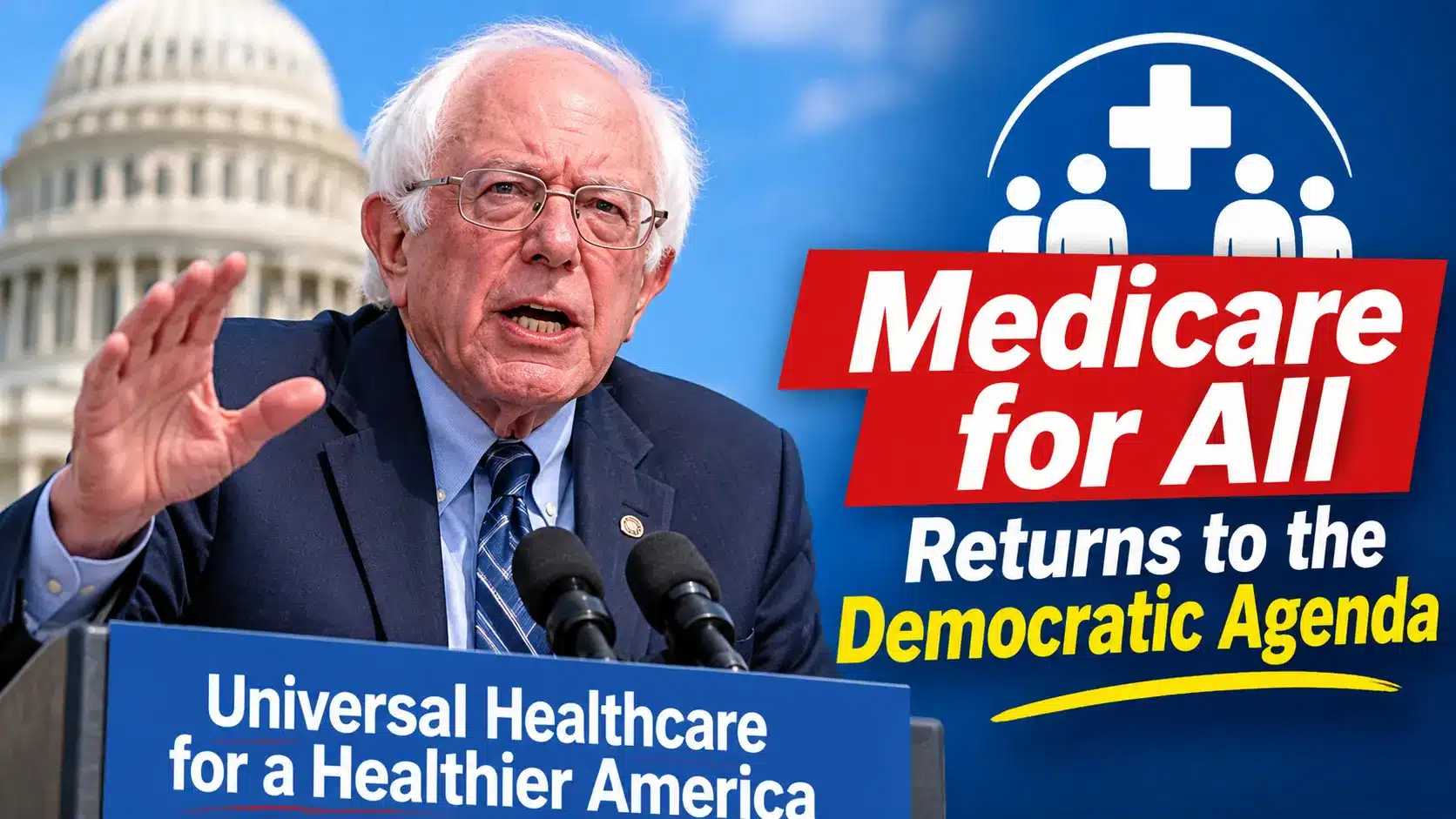
Bernie Sanders Revives Medicare for All as Universal Healthcare Returns to the Democratic Agenda
Medicare for All is back on the Democratic agenda. Sen. Bernie Sanders, who is expected to chair the Senate Health, Education, Labor and Pensions (HELP) Committee when Democrats take control of Congress in January 2027, has unveiled a four-year plan to move the United States toward universal health coverage. It would start by lowering the Medicare eligibility age to 55 and adding dental, vision and hearing benefits. The proposal faces steep political and financial hurdles, but it shows how far the healthcare debate has shifted.
Why Bernie Sanders Is Renewing His Medicare for All Push
Sanders, an independent from Vermont who caucuses with Democrats, is currently the ranking member of the HELP Committee. He told the Associated Press he intends to use the chairmanship to make universal healthcare a top priority and said he wants his bill brought to the Senate floor.
Speaking to reporters, Sanders argued that Medicare for All is no longer a radical idea and that voters frustrated by rising costs are increasingly open to it, Roll Call reported. His push comes after the 2026 midterms, which gave Democrats control of both chambers and put healthcare affordability at the center of their agenda.
What Sanders’ Four-Year Healthcare Plan Proposes
Medicare for All would replace most private and employer insurance with a single, government-run health plan covering everyone, a system known as single-payer. Sanders’ bill phases it in over four years:
- Year 1: Lower Medicare eligibility from 65 to 55, add dental, vision and hearing coverage, and guarantee coverage for children through age 18.
- Year 2: Lower eligibility to 45.
- Year 3: Lower eligibility to 35.
- Year 4: Cover everyone.
This gradual approach is meant to ease the shift, unlike an immediate switch to single-payer. It also means the early stages look a lot like incremental Medicare expansion, which some moderate Democrats already support.
The proposal is a bill, not law. No part of it has been passed.
Why Universal Healthcare Is Gaining Attention
Healthcare costs were a major issue in the 2026 midterms. About 6 in 10 voters said the federal government should play a bigger role in healthcare, and a similar share said they were very concerned about healthcare costs, according to an AP survey of more than 100,000 midterm voters cited by PBS NewsHour.
Rising insurance premiums, the expiration of enhanced Affordable Care Act subsidies and prescription drug prices have kept affordability in the headlines. Progressive candidates who backed Medicare for All also won several races, adding pressure on party leaders.
Democratic leaders have said their first priorities include reversing recent Medicaid cuts and restoring ACA tax credits for people who buy their own insurance.
How Democrats Could Move the Proposal Forward
Democrats are expected to hold a 56-44 Senate majority. That is short of the 60 votes most bills need to overcome a filibuster, which means Republicans could block standalone legislation.
Sanders argues the first stage could pass through budget reconciliation, a process that lets certain tax and spending measures pass the Senate with a simple majority. But reconciliation has limits. Provisions must mainly affect federal spending or revenue, and the Senate parliamentarian can strike policy changes that don’t meet that test.
There is also a committee issue. Medicare falls under the Senate Finance Committee, not HELP, so Sanders would need cooperation from other Democratic leaders to advance key parts of the plan.
How Much Could Medicare Expansion Cost?
No official cost estimate exists for Sanders’ latest plan. The closest reference is a 2022 Congressional Budget Office (CBO) analysis that found lowering Medicare eligibility to 60 would add $155 billion to federal deficits from 2026 to 2031. Lowering the age to 55, adding new benefits and covering children would almost certainly cost more, so that figure should not be read as the plan’s price.
It is also important to separate federal spending from total national healthcare spending. Moving costs from employers and households to the government would increase the federal budget, but supporters argue that total spending could fall through lower administrative costs and stronger price negotiation. Critics counter that the tax increases needed would be very large and that savings estimates depend on cutting payments to hospitals and doctors.
Sanders has previously proposed paying for Medicare for All through employer and household payroll contributions and higher taxes on wealthy individuals, Wall Street and large corporations. Many economists agree the plan would require major new federal revenue, though they disagree on how much.
What Hakeem Jeffries and Other Democrats Are Proposing
House Democratic leader Hakeem Jeffries, expected to become Speaker, has backed lowering the Medicare eligibility age below 65, adding dental, vision and hearing benefits, and ensuring every child can see a doctor. Sanders told the AP that Jeffries “basically supported the first year of Medicare for All.”
Jeffries’ approach is incremental. It expands public coverage without eliminating private insurance. Sanders sees those steps as a path toward full single-payer, while many moderate Democrats see them as the end point. That difference will shape negotiations.
For background on Medicare payment changes coming in 2027, see our report on Medicare’s 2027 physician payment rule.
Prescription Drug Prices and Primary Care
Sanders has long pushed to lower prescription drug prices and expand access to primary care, including through community health centers. As HELP chairman, he is expected to hold hearings and pursue oversight on these issues, though specific new legislation has not been detailed.
These priorities fit within a broader affordability agenda that could attract wider support than full single-payer.
Sanders’ Broader Economic Agenda
Sanders also plans to use the committee to push for:
- Raising the federal minimum wage from $7.25, unchanged since 2009, to $20 an hour.
- Passing the PRO Act to make it easier for workers to form unions.
- Restricting artificial intelligence, including a moratorium on new AI data centers, a pause on advanced AI development and a ban on artificial superintelligence.
He frames these proposals, along with Medicare for All, as part of a working-class economic agenda aimed at limiting corporate power. Business groups and some lawmakers argue a $20 minimum wage could hurt small businesses and employment.
The Political Challenges Ahead
Medicare for All faces several obstacles:
- Democratic divisions: Moderate and centrist Democrats are expected to push back, especially on cost.
- Republican opposition: Most Republicans oppose single-payer and could block legislation through the filibuster.
- The president: Any bill would need President Donald Trump’s signature. Trump has said Medicare for All doesn’t work and has promised to veto Democratic bills, though he has also suggested deals on healthcare are possible.
- Cost and disruption: Replacing private insurance would affect millions of people who have employer coverage, raising concerns among some voters and industry groups.
Supporters, including Rep. Pramila Jayapal and advocacy groups, argue public demand for change is strong. Opponents say incremental fixes to the existing system are more realistic and less disruptive.
What Happens Next?
Democrats take control of Congress on January 3, 2027. Early action is expected on ACA subsidies and Medicaid. Key developments to watch include:
- Whether Sanders formally reintroduces his bill and holds HELP hearings.
- Whether Democrats include Medicare expansion in a reconciliation package.
- Any new CBO cost estimates.
- How moderate Democrats and the White House respond.
The debate is also likely to carry into the 2028 presidential race, where healthcare could again be a defining issue.
Frequently Asked Questions
What is Medicare for All?
It is a proposal to create a single government health plan covering all Americans, replacing most private insurance.
What does Bernie Sanders’ new plan propose?
A four-year transition: lower the Medicare age to 55 with dental, vision and hearing coverage and coverage for children in year one, then to 45, then to 35, and cover everyone in year four.
Has Medicare for All been passed?
No. It is a proposal and would need to pass both chambers and be signed by the president.
How much would Medicare for All cost?
There is no official estimate for the current plan. A 2022 CBO analysis found lowering Medicare eligibility to 60 alone would add $155 billion to deficits over six years.
Can Democrats pass it with a simple majority?
Sanders believes the first stage could go through budget reconciliation, but Senate rules limit what can be included.
Does Hakeem Jeffries support Medicare for All?
He supports several incremental steps, such as lowering the eligibility age and adding benefits, but not full single-payer at this time.
Conclusion
Bernie Sanders’ renewed push puts universal healthcare back at the center of the Democratic agenda. The first steps of his plan overlap with ideas party leaders already support, but full Medicare for All faces major obstacles in cost, Senate rules and presidential opposition. What happens in 2027 will show whether Democrats pursue incremental expansion or a broader overhaul.
Find more evidence-based health guides on Learning Joan.
