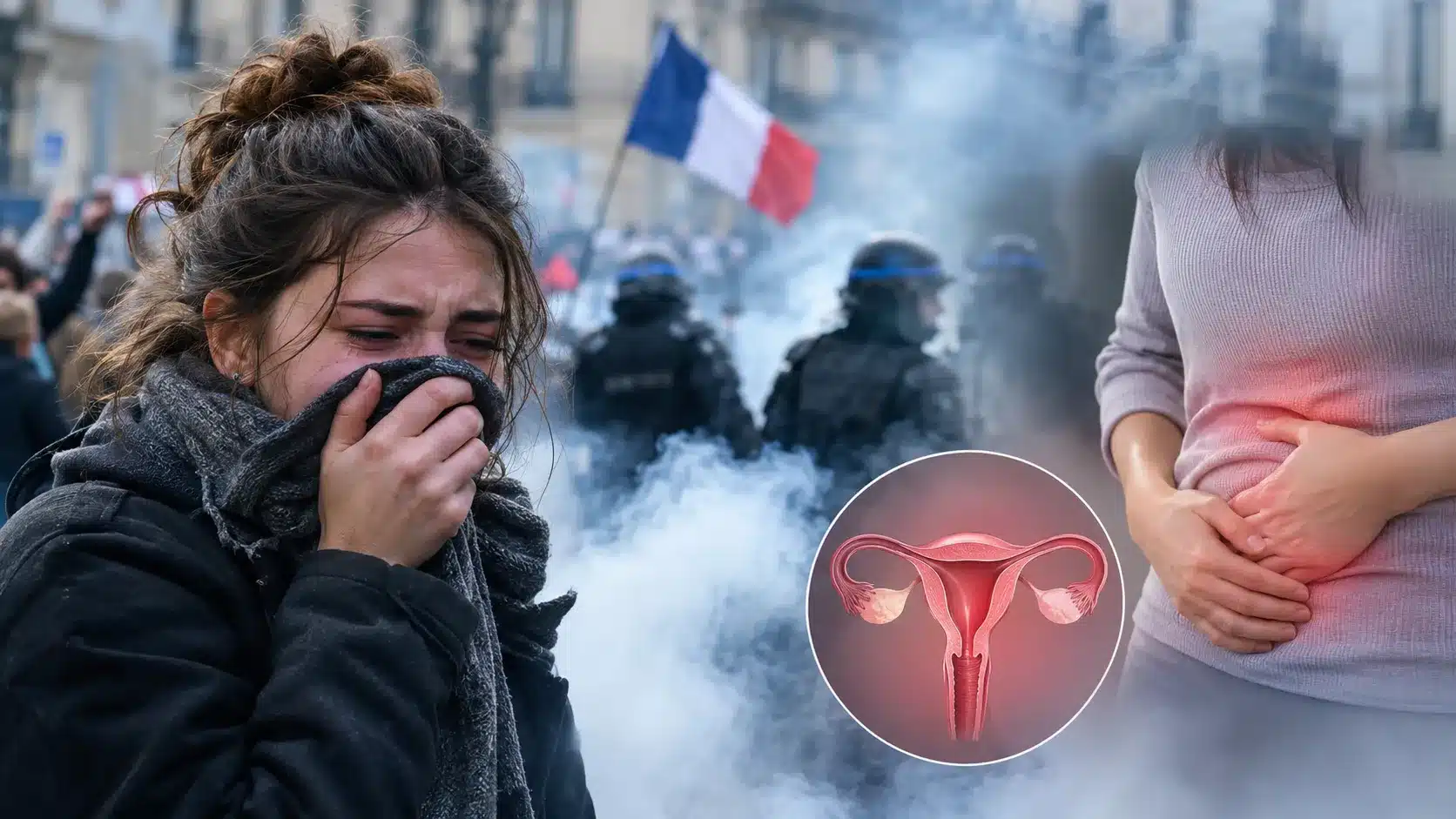
France Tear Gas Controversy: Thousands of Women Report Bleeding and Reproductive Health Issues
Can tear gas affect women’s reproductive health? A French advocacy group says it has received more than 10,000 testimonies from women and girls reporting unexpected bleeding, severe cramps and disrupted cycles after police used tear gas at protests in France this autumn. Some also reported pregnancy losses. The accounts are self-reported and unverified, and science has not established that tear gas causes these effects. France’s Interior Ministry says no published studies show such a link, but activists and lawmakers are calling for independent research and a ban.
What Happened During the France Tear Gas Protests?
France has seen a wave of protests in recent months, including student demonstrations and rallies over the cost of living. On October 6, 2026, a Paris demonstration against under-resourced schools involved scuffles and tear gas. On October 17, protests in Paris were marred by rioting and looting, and police fired tear gas grenades, The Associated Press reported.
The grenades used by French police contain CS, a chemical irritant. After the protests, women began sharing accounts online of menstrual changes, prompting a new campaign.
France Tear Gas Controversy: Key Facts
| Item | Details |
|---|---|
| Country | France |
| Key protest dates | October 6 and October 17, 2026, in Paris, among others |
| Tear gas used | CS gas grenades fired by police |
| Testimonies collected | More than 10,000, according to Lacrymos de Sang |
| Share reporting symptoms | Not published |
| Reported pregnancy losses | Reported by some women; no verified total published |
| Group collecting accounts | Lacrymos de Sang (“Tears of Blood”) |
| Government response | Interior Ministry says no studies show a link; tear gas remains in use |
| Scientific status | Possible association suggested; no proven causal link |
The testimonies were collected by an advocacy group, have not been reviewed by independent doctors, and cannot show how common symptoms are among everyone exposed.
Thousands of Women Report Reproductive Health Problems
Lacrymos de Sang was founded during the recent protests by Eva-Luna Tholance, a former journalist who had investigated the issue six years earlier. She said a large number of women describe cramps far worse than their usual periods.
Reported symptoms include:
- Unexpected bleeding, from spotting to heavy bleeding lasting days or weeks.
- Severe menstrual cramps and intense abdominal pain.
- Irregular or disrupted menstrual cycles.
- Bleeding despite being postmenopausal or using hormonal contraception.
- Reported pregnancy complications and losses.
Photographer Chloé Baroux told the AP her cycle had become irregular again over the past two months. She had linked earlier menstrual problems to tear gas exposure during 2020–2021 protests.
Self-reported accounts are important signals, but they cannot prove that tear gas caused these symptoms or show how widespread they are.
What Is Tear Gas and How Does It Affect the Body?
Tear gas is a term for chemical agents used to disperse crowds. The most common is CS gas (2-chlorobenzalmalononitrile), which irritates the eyes, skin and airways.
Established short-term effects, according to the US Centers for Disease Control and Prevention, include:
- Burning, watery eyes and blurred vision.
- Coughing, chest tightness and difficulty breathing.
- Skin irritation and burns.
- Nausea and vomiting.
Most effects fade within hours after leaving the area, though prolonged or heavy exposure, especially in enclosed spaces, can cause more serious harm. Possible effects on reproductive health are not established and need further research.
Can Tear Gas Cause Miscarriages?
There is no scientific evidence proving that tear gas causes miscarriage. Reports of pregnancy loss after exposure do not establish that tear gas was responsible, since miscarriages are common and have many causes.
Researchers say the question has rarely been studied. Asha Hassan of the University of Minnesota Medical School, who led a study on protest exposure, told the AP that scientists have many theories but do not fully know. Pregnant people are generally advised to avoid exposure to chemical irritants. Read more in our women’s health section.
What Do Scientists Say About Tear Gas and Women’s Health?
A 2023 study in Frontiers in Epidemiology, led by Hassan, surveyed people exposed to tear gas during 2020 Black Lives Matter protests in the US. It found a potential relationship between exposure and adverse reproductive health outcomes, such as menstrual changes, but did not prove cause and effect.
The study had important limits. It relied on self-reported data collected at one point in time, and people who experienced symptoms may have been more likely to respond. Similar limits apply to the French testimonies.
Hassan also noted that early tear gas research mostly involved healthy young men in military settings, leaving women’s health largely unstudied. Possible mechanisms, such as stress responses or inflammation, remain hypotheses.
French Government Response to Tear Gas Health Concerns
Interior Minister Laurent Nuñez rejected calls to stop using tear gas, saying it is essential for crowd control and safer than alternative weapons.
The Interior Ministry said no published scientific studies show that CS gas causes menstrual changes or miscarriages. It said most effects resolve within hours, though longer-lasting skin and eye symptoms “cannot be ruled out,” and other effects have been suggested but not demonstrated. The ministry said it conducted studies in 2021 and 2022, mainly on law enforcement officers, but did not share them with the AP.
Why Are Activists Demanding a Tear Gas Ban?
Lacrymos de Sang and other campaigners want authorities to suspend tear gas use for crowd dispersal. Opposition lawmakers are seeking a ban and independent research into its health effects. Advocates also call for greater transparency, including publication of government studies.
A 2020 AP investigation found that tear gas has received limited study and oversight, with concerns about use in confined spaces, excessive amounts and canisters fired directly at people.
What Happens Next?
Key questions remain: whether tear gas affects reproductive health, how much exposure matters, and who is most at risk. Answering them will require independent, peer-reviewed studies with medical assessments rather than surveys alone.
Frequently Asked Questions
Why is France’s use of tear gas trending?
An advocacy group says more than 10,000 women and girls reported bleeding, cramps and other reproductive symptoms after police used tear gas at French protests in autumn 2026, prompting calls for research and a ban.
What are the established health effects of tear gas?
Burning eyes, tearing, coughing, chest tightness, skin irritation and nausea. Most effects fade within hours after leaving the exposed area, though heavy or enclosed exposure can be more harmful.
Can tear gas affect menstrual cycles?
Some people report menstrual changes after exposure, and one 2023 study found a possible association. However, research is limited and has not proven that tear gas causes menstrual changes.
Can tear gas cause miscarriages?
There is no scientific evidence proving tear gas causes miscarriage. Some women have reported pregnancy loss after exposure, but miscarriages have many causes, and more research is needed.
How many women reported health problems after the French protests?
Lacrymos de Sang says it received more than 10,000 testimonies. These are self-reported and unverified, so they do not show how common symptoms are among everyone exposed.
What is CS tear gas?
CS (2-chlorobenzalmalononitrile) is the most common tear gas. It is a chemical irritant that affects the eyes, skin and airways and is used by police forces worldwide for crowd control.
What has the French government said about reproductive health concerns?
The Interior Ministry says no published studies show CS gas causes menstrual changes or miscarriages. The interior minister says tear gas remains essential for crowd control.
Conclusion
The France tear gas controversy has brought attention to a question that science has barely examined. Thousands of reported experiences deserve serious, independent study, but they are not yet proof of harm. Until better research is available, the debate will continue between public safety, policing and women’s health.
Find more evidence-based health guides on Learning Joan.
