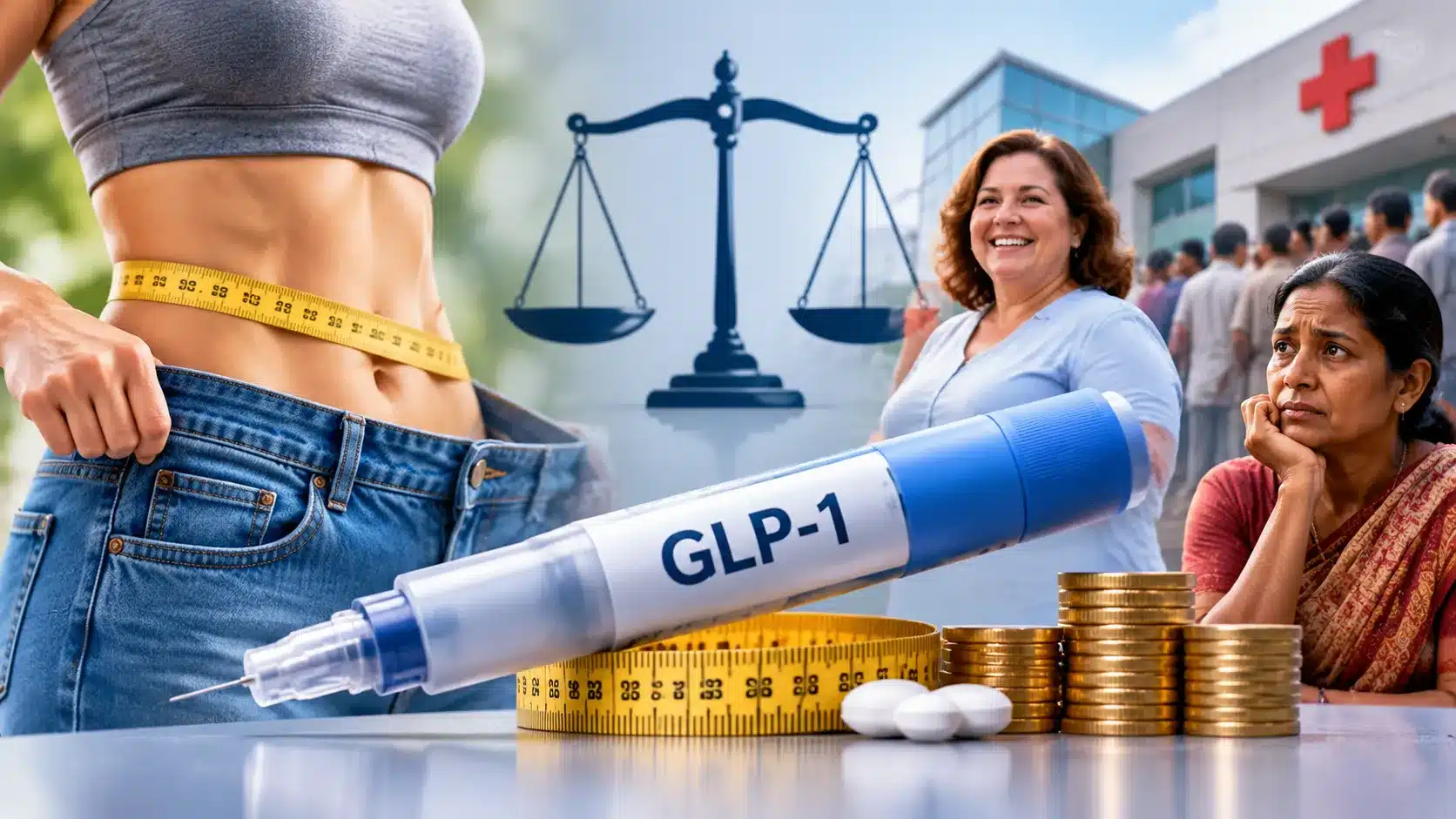
GLP-1 Weight-Loss Revolution: Medical Breakthrough or an Increasingly Unequal Healthcare System?
Few medicines have changed a field as quickly as GLP-1 drugs have changed obesity care. Semaglutide (Wegovy, Ozempic) and tirzepatide (Zepbound, Mounjaro) help many patients lose 15% to 20% of their body weight, results once seen mainly with surgery. Yet in 2026, as prices fall and new pills arrive, many people who qualify still cannot get them. Employers are pulling coverage, prescriptions go unfilled, and access often depends on income and insurance. This investigation looks at what the evidence shows, who is being left out, and where obesity treatment is heading.
How GLP-1 Drugs Work
GLP-1 (glucagon-like peptide-1) is a gut hormone released after eating. Drugs that mimic it slow stomach emptying, help the pancreas release insulin, and act on brain areas that control appetite and fullness. Semaglutide targets the GLP-1 receptor. Tirzepatide also activates a second hormone receptor, GIP, which may add to its effect.
Both were first approved for type 2 diabetes. Higher-dose versions, Wegovy and Zepbound, are approved for chronic weight management in adults with obesity, or overweight with a related health condition.
How Effective Are Semaglutide and Tirzepatide?
In the landmark STEP 1 trial, adults on semaglutide 2.4 mg lost about 15% of their body weight over 68 weeks, compared with about 2% on placebo. In SURMOUNT-1, the highest dose of tirzepatide produced average weight loss of about 21% over 72 weeks.
A head-to-head trial, SURMOUNT-5, published in the New England Journal of Medicine in 2025, found tirzepatide led to greater weight loss than semaglutide, about 20% versus 14% after 72 weeks. Individual results vary widely, and some people respond much less.
The benefits go beyond the scale. Semaglutide reduced major heart attacks, strokes and cardiovascular deaths by 20% in people with heart disease and overweight in the SELECT trial. The drugs also improve blood sugar and blood pressure, and are being studied for sleep apnea, liver disease and kidney disease.
Why weight-loss percentages are not the whole story
Weight loss alone may not capture treatment success. Doctors are increasingly focused on improvements in blood pressure, blood sugar, mobility, sleep and quality of life. Some studies show a substantial share of lost weight can come from lean mass, including muscle, which matters especially for older adults. Strength training and adequate protein are often recommended alongside treatment.
Very rapid or excessive weight loss can cause problems such as gallstones, nutritional deficiencies and frailty. Common side effects include nausea, vomiting, diarrhea and constipation. Rare but serious risks, such as pancreatitis, are listed on labels, and regulators have also examined possible links to a rare eye condition. Read our report on GLP-1 drugs and vision loss.
Appetite, Fullness and Eating Behavior
Many patients say GLP-1 drugs quiet “food noise,” the constant thoughts about eating. By acting on brain reward and appetite centers, the drugs reduce hunger and help people feel full sooner.
But feeling full is not the same as losing cravings. Food cues, stress, habits and emotional eating can still drive behavior. Researchers are still learning how these drugs affect brain reward pathways and whether those effects last over time.
One clear finding is that weight often returns when treatment stops. In trials where patients switched to placebo, many regained a large portion of the weight they had lost within a year. This suggests that for many people, GLP-1 drugs work as long-term treatments, similar to blood pressure medicines, rather than short-term cures.
Pharmaceutical Advertising and Consumer Demand
Drugmakers have spent heavily on direct-to-consumer advertising for GLP-1 medicines, from TV ads to social media and telehealth partnerships. The United States is one of only two countries, along with New Zealand, that allow direct-to-consumer prescription drug ads.
Supporters say advertising raises awareness of obesity as a treatable disease and encourages people to talk to doctors. Critics argue it can create unrealistic expectations, downplay side effects and push demand toward costly drugs. Social media trends have also fueled interest among people who may not meet medical criteria.
These concerns raise ethical questions about how obesity treatment is marketed, especially as manufacturers sell directly to patients online.
The Growing Inequality in GLP-1 Access
Even as prescriptions have soared, many eligible patients never receive treatment. A 2025 study found only about 3% of eligible adults received semaglutide or tirzepatide for obesity from 2021 through 2024, with disparities by race, sex, social vulnerability and urban or rural location, AJMC reported.
Getting a prescription is only the first hurdle. A 2026 JAMA Health Forum study of nearly 10,000 GLP-1 prescriptions among insured Colorado patients found 40% were never filled. Black and Hispanic patients were less likely to fill prescriptions than white patients, and patients with obesity alone faced especially high out-of-pocket costs, CU Anschutz reported.
Access gaps also affect young people. A January 2026 national study found fewer than 1% of eligible adolescents with obesity received a GLP-1 prescription, with lower rates among those on Medicaid and in marginalized communities.
Barriers include prior authorization requirements, coverage exclusions for obesity, limited access to specialists and differences in how doctors prescribe.
Employers and Insurers Are Pulling Back Coverage
Employers are reassessing coverage as costs climb. According to Business Group on Health, the share of large employers covering GLP-1s for obesity fell from 72% in 2025 to 60% in 2026, SHRM reported. A separate WTW survey found coverage for weight loss dipped from 57% to 53%, the first decline in three years, with 91% of employers dropping or considering dropping coverage citing cost.
Companies including Starbucks have ended coverage for weight loss while keeping it for diabetes and other approved conditions. Smaller employers are even less likely to cover the drugs. SHRM’s 2026 survey found only 15% of employers covered GLP-1s for weight management, compared with 47% for type 2 diabetes.
When coverage ends, patients may have to pay out of pocket, switch drugs or stop treatment. Stopping suddenly can lead to weight regain and loss of improvements in blood sugar and blood pressure. Doctors recommend patients talk to their clinician before stopping.
The Financial Burden on Patients
List prices for Wegovy and Zepbound have been around $1,000 to $1,350 a month. Novo Nordisk has announced plans to cut Wegovy’s US list price to $675 starting in January 2027.
Direct-to-consumer programs have lowered cash prices. In 2026, self-pay prices through NovoCare Pharmacy and LillyDirect range from roughly $149 to $499 a month depending on the drug, dose and form, including new pill versions. Lilly’s once-daily pill orforglipron (Foundayo) was approved in April 2026.
Lower prices help, but $300 to $500 a month is still more than many families can afford, and cash purchases often don’t count toward insurance deductibles. Compounded versions sold through some telehealth companies cost less but are not FDA-approved and raise quality and safety concerns.
The risk is a two-tier system, in which people with money or generous insurance receive advanced obesity care while others cannot.
The Future of Obesity Treatment
GLP-1 drugs are likely to become a standard long-term option for many people with obesity. More oral options and next-generation drugs, including combination therapies, are in development and could expand choices and lower costs.
Key questions remain:
- How safe is lifelong use over decades?
- Who benefits most, and who can safely stop?
- Will long-term health savings offset drug costs for insurers and employers?
- How can access gaps by race, income and age be closed?
- What role should lifestyle programs and nutrition support play?
Medical groups increasingly describe obesity as a chronic disease shaped by genetics, biology and environment, not simply willpower. Treating it that way may mean covering medications, nutrition counseling and behavioral support together, much as other chronic conditions are managed.
What Is Established and What Is Still Uncertain
- Established: GLP-1 drugs produce significant weight loss in clinical trials, improve blood sugar, and semaglutide reduced cardiovascular events in high-risk patients.
- Established: Weight is often regained after stopping treatment.
- Emerging: Long-term effects on muscle, bone and eating behavior.
- Emerging: Real-world cost savings and long-term safety over many years.
- Expert commentary: Concerns about advertising and unequal access, supported by growing but still limited data.
Frequently Asked Questions
How much weight do people lose on GLP-1 drugs?
In trials, about 15% on semaglutide and up to about 20% on tirzepatide, though results vary.
Is tirzepatide more effective than semaglutide?
In the SURMOUNT-5 trial, tirzepatide led to greater average weight loss than semaglutide.
What happens if you stop taking a GLP-1 drug?
Many people regain much of the lost weight, so treatment is often long-term.
Why are employers dropping GLP-1 coverage?
Mainly because of rising costs, with more employees using the drugs than budgeted.
How much do GLP-1 drugs cost without insurance?
Self-pay manufacturer programs range from about $149 to $499 a month in 2026, depending on the drug and dose.
Who has the hardest time accessing GLP-1 drugs?
Studies show lower access among Black and Hispanic patients, Medicaid enrollees, rural residents and lower-income patients.
Conclusion
GLP-1 drugs are a genuine medical advance, but their promise is unevenly shared. As prices drop and new versions arrive, the biggest challenge may not be science but access. Whether these drugs become a breakthrough for everyone or a benefit mainly for those who can pay will depend on decisions by insurers, employers, drugmakers and policymakers in the years ahead.
Find more evidence-based health guides on Learning Joan.
