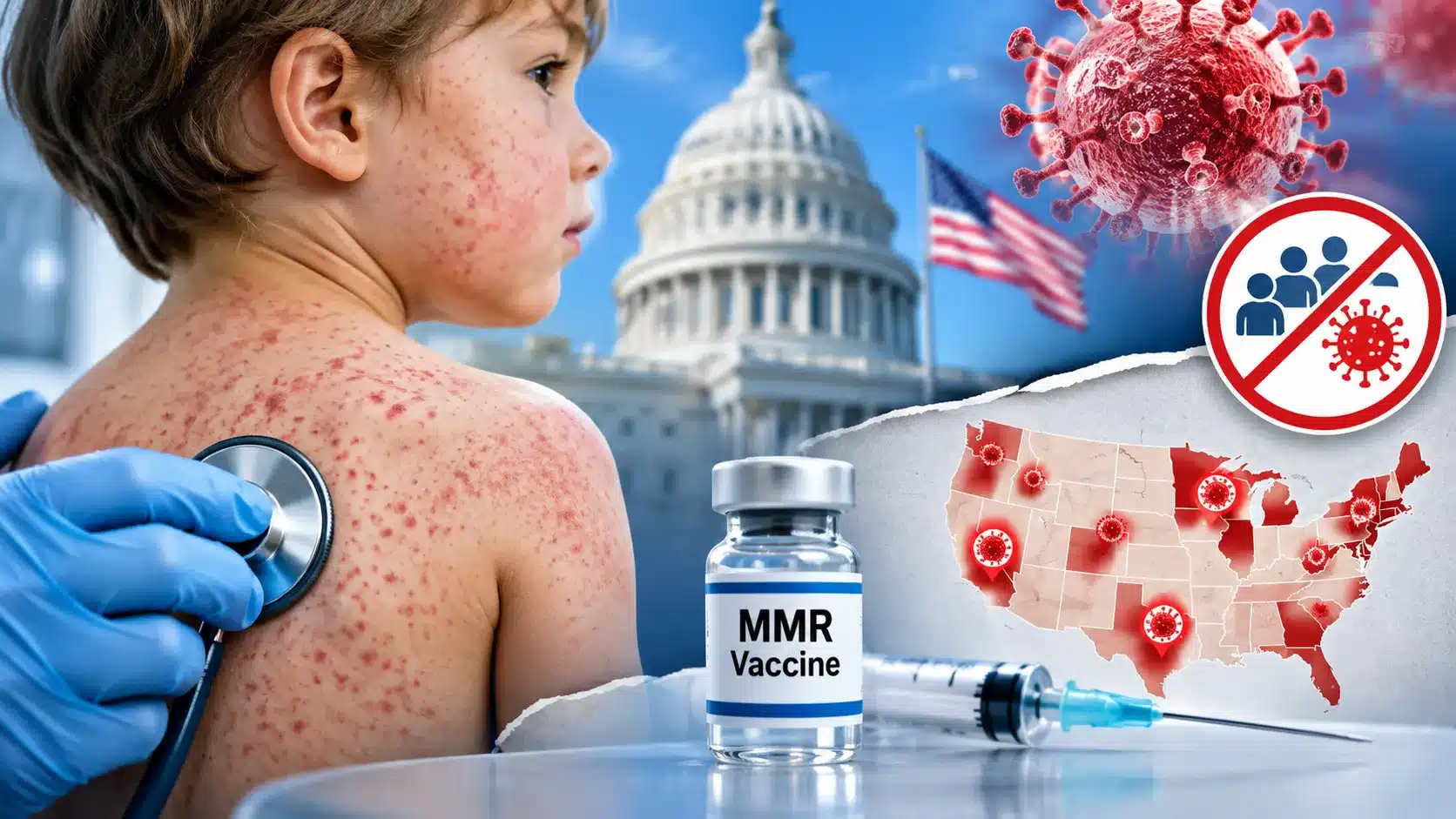
US Measles Crisis 2026: Elimination Status in Doubt as Deaths Reach 10
Measles-associated deaths in the United States reached 10 this year after Pennsylvania and Wisconsin each reported a new death on November 13, 2026. The same day, a source close to the process told CNN that an independent expert commission convened by the Pan American Health Organization (PAHO) had concluded the US no longer meets the criteria for measles elimination, a status held since 2000. With more than 5,400 confirmed cases, the US measles elimination status 2026 is in serious doubt, and the death toll is the highest in more than three decades.
America Faces a Historic Measles Public Health Setback
The US was declared measles-free in 2000 after decades of high vaccination rates. That status now appears to be ending. Multiple outlets, citing CNN and the Wall Street Journal, reported on November 13 that PAHO’s Regional Verification Commission found measles has been spreading continuously in the US for more than a year.
Sustained transmission, falling vaccination rates, and thousands of infections have combined to create the worst US measles year since 1991.
Has the US Officially Lost Measles Elimination Status?
The commission’s finding is a recommendation, not the final word. Under PAHO’s process, the commission reports to the PAHO Director, Dr. Jarbas Barbosa, who formally notifies the country. PAHO officials said a public announcement was being scheduled for the following week. As of November 14, no final designation had been published.
Latest US Measles Cases and Death Toll
As of November 13, 2026, the CDC had confirmed 5,412 measles cases in 45 states, more than double the 2,289 confirmed in all of 2025 and the most since 1991. About 96% of patients were unvaccinated or had unknown vaccination status. The CDC has not published a current national hospitalization rate, but it estimates that about 1 in 5 unvaccinated people with measles is hospitalized.
State health departments have reported 10 measles-associated deaths this year, while the CDC’s website lists six. The difference is explained below.
Deaths by state (as of November 13, 2026)
- Pennsylvania: 7 deaths, 1,542 confirmed cases.
- Wisconsin: 2 deaths, 651 confirmed cases.
- New York: 1 death, an unvaccinated infant in Lewis County reported November 2.
The US recorded three measles deaths in 2025, the first since 2015.
Two More Measles-Associated Deaths Reported
According to Al Jazeera, two new deaths were reported on Friday, November 13:
- Wisconsin infant measles death: The Department of Health Services reported the death of an infant, the state’s second measles-associated death in about a week. The first, announced November 5, was the state’s first in 36 years.
- Pennsylvania: An unvaccinated patient who had tested positive for measles died, the state’s seventh measles-associated death of 2026.
Officials did not release ages or other personal details. Pennsylvania’s earlier deaths included two infants too young to be vaccinated, an 18-year-old, and a 40-year-old woman. Read our coverage of the Pennsylvania measles outbreak.
Why CDC and State Measles Death Counts Differ
States report deaths as measles-associated, meaning the person had confirmed measles when they died and the infection is believed to have contributed. A death caused by measles is one where measles is listed as the underlying cause on the death certificate. Most measles deaths happen through complications such as pneumonia or encephalitis, so the two categories often overlap but are not always identical.
In 2026, the CDC changed how it counts. Instead of automatically adding state-reported deaths, it now lists only deaths it has independently confirmed. As of November 13, the CDC’s website showed six measles-related deaths, four fewer than the states’ total.
The gap has become a public dispute. Al Jazeera reported that Health Secretary Robert F. Kennedy Jr. asked CDC Director Erica Schwartz not to include certain deaths in the official tally, saying there was no evidence they were measles-associated. Pennsylvania Gov. Josh Shapiro has objected, arguing that his state’s deaths were properly investigated and classified.
Federal officials say stricter standards improve accuracy. State officials and many infectious disease experts say the change undercounts the toll and sends a confusing message during an active outbreak. Both sides agree that the underlying outbreaks are real and serious.
What Does Measles Elimination Status Mean?
Measles elimination means no continuous, local spread of the virus for at least 12 months in a defined area. It does not mean zero cases. Travelers can bring measles into a country, and small outbreaks can happen without affecting elimination status.
The key test is whether the same strain keeps spreading. Health agencies use genomic surveillance, sequencing the virus from patients, to see whether outbreaks in different states are linked. If one lineage circulates for 12 months or more, measles is considered endemic again. Experts have traced current US transmission back to the large West Texas outbreak that began in January 2025.
Why Measles Is Spreading Across the United States
No single factor explains the resurgence. Researchers point to several that work together:
- Lower childhood vaccination rates nationally since 2019.
- Geographic clusters of unvaccinated people in close-knit communities, where the virus spreads easily.
- Missed routine shots during and after the COVID-19 pandemic.
- Vaccine misinformation and rising nonmedical exemptions.
- International travel, which seeds new chains from countries with ongoing outbreaks.
- Gaps in healthcare access in rural and underserved areas.
- Prolonged community transmission that allowed one strain to keep circulating.
Measles is extremely contagious. One case can infect up to 90% of unprotected close contacts, so even small gaps in immunity can sustain an outbreak.
Childhood MMR Vaccination Rates Continue to Decline
Kindergarten MMR coverage dropped from 95.2% in the 2019–2020 school year to 92.4% in 2025–2026. About 95% two-dose coverage is generally needed to keep measles from spreading in a community.
National averages hide local gaps. Only 10 states reported kindergarten coverage above 95% for the latest school year, while 23 were below 91%. A single school or county with low coverage can fuel an outbreak even in a state with a good average.
Which States Are Most Affected?
Pennsylvania
Pennsylvania has the nation’s largest outbreak, with 1,542 cases and seven deaths across more than 40 counties.
Wisconsin
Wisconsin has 651 confirmed cases and two infant deaths, its largest outbreak in decades.
Utah and South Carolina
Both states have reported outbreaks of 500 or more cases. South Carolina’s outbreak began in 2025 and was closely watched as evidence of continued transmission.
New York
New York declared a statewide disaster emergency on October 5 as cases rose, mostly upstate.
Cases have also been reported in about 40 other states and Washington, D.C. Track the full picture in our US measles outbreak 2026 report.
What Health Experts Say About Measles Complications
Measles begins with high fever, cough, runny nose, and red, watery eyes (conjunctivitis). A rash appears a few days later, starting on the face.
Serious complications include:
- Pneumonia, the most common cause of measles death in children.
- Encephalitis, which can cause permanent brain damage.
- Severe diarrhea and dehydration.
- Hospitalization and death.
Babies too young to be vaccinated, pregnant women, people with weakened immune systems, and anyone unvaccinated face the highest risk. Several of this year’s deaths involved infants.
Does the MMR vaccine protect?
The CDC recommends two MMR doses: at 12–15 months and at 4–6 years. Two doses are about 97% effective; one dose is about 93% effective.
- Catch-up: Children and adults without proof of immunity should be vaccinated.
- Travel: Infants 6–11 months should get an early dose before international travel; older travelers should have two doses.
- Outbreaks: Local health departments may advise early infant doses in affected areas.
Vaccinated people can occasionally get measles, but illness is usually milder and less contagious.
Federal Health Officials Face Questions Over Outbreak Response
CDC Director Erica Schwartz said a PAHO decision would not change the federal response, stressing that vaccination, not the elimination label, protects Americans. The CDC has sent support teams to several states, and federal funding has helped some health departments respond.
States have run vaccination clinics, issued exposure alerts, and in some cases excluded unvaccinated students from schools during outbreaks. The national debate centers on federal vaccine messaging, death reporting, and how much support states should receive. Read our coverage of RFK Jr. and the Senate inquiry into measles in Samoa.
How the US Compares With Canada and Mexico
Canada lost its measles elimination status in November 2025 after more than 5,000 cases, ending the Americas’ status as a measles-free region. Mexico has faced a deadly outbreak, centered in Chihuahua and linked to the strain that spread in Texas, and its status was reviewed at the same November 2026 meeting.
Because outbreaks cross borders, PAHO says strong surveillance and high coverage across all countries are essential.
Can the United States Regain Measles Elimination Status?
Yes, but only by meeting PAHO’s verification criteria. The US would need to stop continuous transmission for at least 12 months and show strong surveillance and lab data to prove it. That means raising coverage in under-vaccinated communities, working with trusted local leaders, improving access to care, and responding quickly to every case. The Americas regained regional status in 2024 before losing it again, showing recovery is possible but fragile.
Frequently Asked Questions
How many people have died of measles in the US in 2026?
States have reported 10 measles-associated deaths as of November 13: seven in Pennsylvania, two in Wisconsin, and one in New York. The CDC lists six.
Has the US officially lost measles elimination status?
An expert commission reportedly found the US no longer qualifies. The PAHO Director’s formal announcement was expected the following week.
Why are CDC and state death counts different?
The CDC now counts only deaths it independently confirms, while states report deaths where measles was present and believed to contribute.
How many measles cases are there in 2026?
The CDC reported 5,412 confirmed cases as of November 13, compared with 2,289 in all of 2025.
Who is most at risk from measles?
Infants, pregnant women, people with weakened immunity, and anyone unvaccinated.
Does the MMR vaccine still work?
Yes. Two doses are about 97% effective against measles.
Conclusion
With 10 measles-associated deaths, more than 5,400 cases, and an expert finding that measles is endemic again, 2026 marks a major public health reversal. Disputes over death counts should not obscure the core lesson: measles returns where vaccination falls. Checking your family’s MMR status is still the best protection.
Find more evidence-based health guides on Learning Joan.
