Second Woman Sues Kaiser Permanente Over Alleged Rubbing Alcohol Injection
Published November 12, 2026
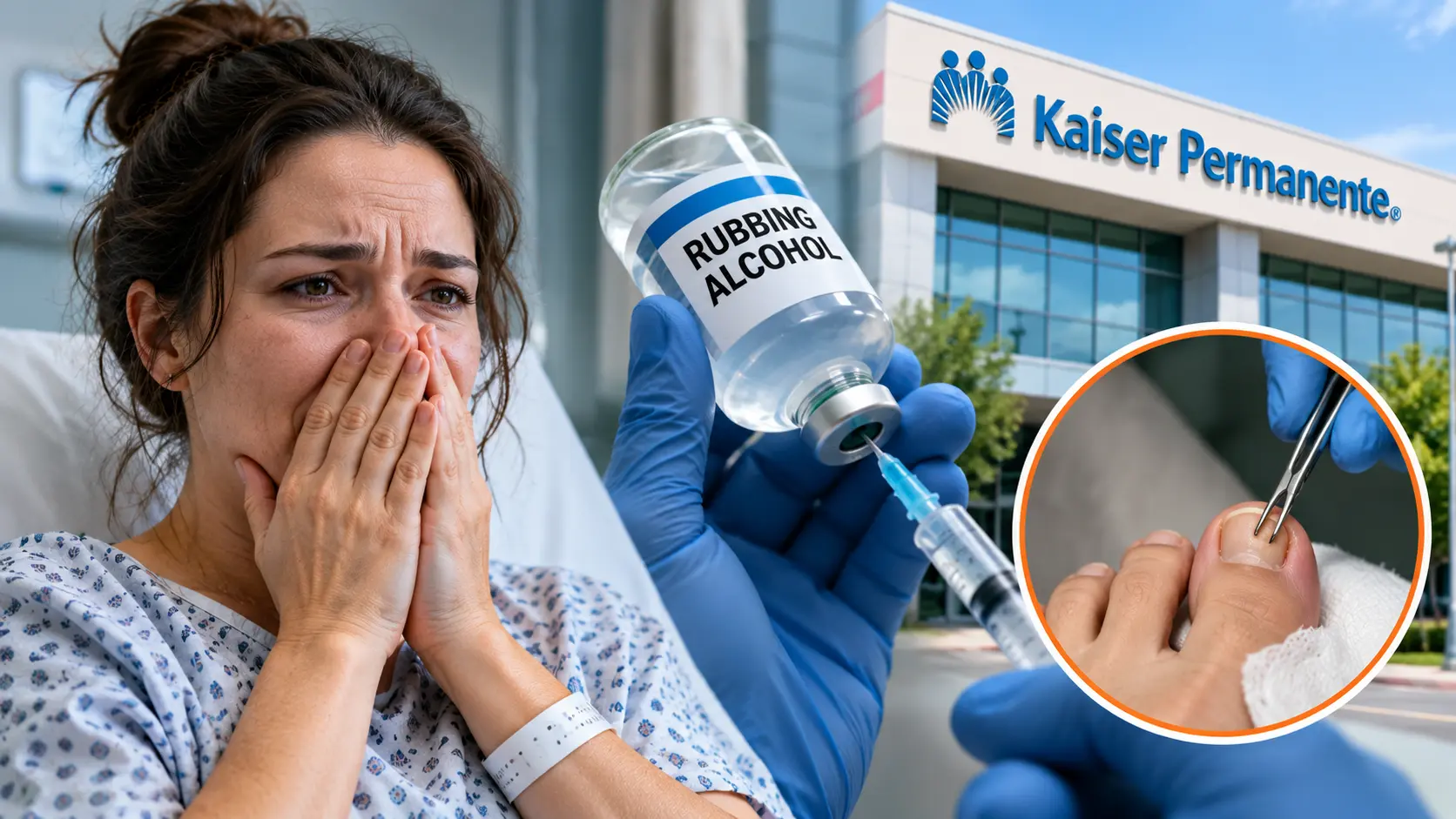
A second Oregon woman has sued Kaiser Permanente and podiatrist Colin Mizuo. Judith Young alleges that he injected rubbing alcohol instead of a numbing medicine before removing part of her ingrown toenail at a Hillsboro clinic. Her $23 million lawsuit follows a $13 million case filed in June by another patient making nearly identical claims. Neither lawsuit has been decided, and the allegations have not been proven in court.
What Happened During the Toenail Removal Procedure?
According to her complaint, as reported by KOIN and KGW, Young, a Washington County resident, saw Dr. Mizuo on January 22, 2026, at Kaiser Permanente Westside Medical Center in Hillsboro. She went to have the sides of an ingrown toenail on one of her big toes removed.
The lawsuit alleges that instead of lidocaine, a standard local anesthetic, the doctor injected rubbing alcohol into her toe. It says she told him she was in terrible pain and could feel everything, but that the procedure continued.
Why local anesthesia is used
Partial or full toenail removal is a common office procedure. Clinicians typically numb the toe with a “digital block,” an injection of local anesthetic at the base of the toe, so the patient feels pressure but little or no pain. The clinician then usually checks that the toe is numb before starting.
Judith Young Files $23 Million Lawsuit
Young and her husband, Thomas Young, filed suit in Multnomah County Circuit Court. They accuse Kaiser Permanente and Mizuo of negligence and medical malpractice. The complaint seeks $23 million in total, including $1 million for Thomas Young for loss of society and companionship, according to KGW’s reporting. Both women are represented by attorney Laura Kalur of Tigard.
The case is drawing attention because it’s the second lawsuit with the same allegation against the same doctor at the same facility, within about a week of each other.
Important: the amount sought in a lawsuit is a demand, not an award. No court has found the defendants liable.
Patient Reports Severe Pain and Tissue Damage
The lawsuit describes the following sequence. These are allegations from the complaint, not court findings:
- January 31: Young went to a Kaiser emergency department. Staff diagnosed an infection, prescribed antibiotics and sent her home.
- Following weeks: she returned to the emergency department three more times as her toe worsened. At one point she received IV antibiotics.
- Around March 2: Kaiser’s head of podiatry contacted her and said she had been injected with rubbing alcohol. The lawsuit says a promised “letter of explanation” never arrived.
According to The Oregonian/OregonLive, the suit alleges a chemical burn that killed tissue in her big toe, with blackened skin and damage to the bone. It also says she couldn’t work for months and now lives with chronic pain and difficulty walking. The complaint also claims nerve injury, disfigurement and psychological harm.
These injuries are described in the lawsuit and haven’t been independently evaluated by a court. Medical records filed as evidence will be key as the case moves forward.
Earlier $13 Million Lawsuit Raises Similar Allegations
In June, Sarah Blackman and her husband, Jason Fleskes, sued Kaiser and Mizuo for $13 million. Her complaint alleges that on January 29, 2026, the doctor injected 4 milliliters of 70% isopropyl alcohol into each of two toes, instead of lidocaine, before removing two ingrown toenails.
Similarities
- Same doctor, same Hillsboro facility, appointments a week apart in January
- Both women allege they were in severe pain but the procedure continued
- Both later sought emergency care, where staff treated suspected infections without knowing about the alleged injection
- Both say Kaiser disclosed the alleged error in early March and promised an explanation letter that never came
Differences
- Blackman had two toes treated. Young had one.
- Blackman’s suit says she was admitted to the hospital and treated for infection and tissue necrosis.
- Blackman’s complaint alleges the doctor told her he was in a rush. Young’s complaint centers on her reports of pain going unaddressed.
Blackman’s complaint also alleges that Kaiser tried to conceal the cause of her injuries. That’s an allegation in her lawsuit, not an established fact.
Who Is the Doctor Named in the Lawsuits?
Colin Mizuo is a podiatrist who treated both women at Kaiser Permanente Westside Medical Center. The Oregonian reported that he has since left Kaiser, without saying when or why. He could not be reached for comment. Public Oregon Medical Board records show no disciplinary action against him, according to the same report. Nothing in the public record suggests any intent to harm patients.
Kaiser Permanente Responds to Patient Safety Concerns
In response to Young’s lawsuit, Kaiser said that patient safety is its highest priority and that it takes concerns about its care very seriously. Spokesperson Karen Vitt said the organization will review Young’s care and take appropriate steps to address any issues it identifies. Kaiser declined to comment on Blackman’s lawsuit when it was filed.
According to both lawsuits, a podiatry leader described the event in patient charts as an “unfortunate mistake.” Kaiser hasn’t publicly addressed the specific allegations in court filings reported so far. A lack of public comment is common in active litigation and shouldn’t be read as an admission.
Why Injecting Rubbing Alcohol Can Be Dangerous
Lidocaine works by temporarily blocking sodium channels in nerve cells, which stops pain signals from reaching the brain. Rubbing alcohol (usually 70% isopropyl alcohol) has no anesthetic purpose when injected. It’s meant for cleaning skin and surfaces.
Injected into tissue, concentrated alcohol can:
- Cause intense burning pain
- Damage and kill cells, leading to tissue death (necrosis)
- Injure nerves and small blood vessels, especially in areas with limited blood supply like the toes
- Create conditions that resemble, or make the tissue vulnerable to, infection
These are general medical risks. Whether they occurred in either plaintiff’s case will be decided through evidence and expert testimony.
What Medical Safety Protocols Should Prevent Such Errors?
Medication mix-ups involving clear liquids are a recognized patient-safety risk. The Institute for Safe Medication Practices and The Joint Commission recommend safeguards such as:
- Labeling every syringe and container, including on procedure trays
- Storing antiseptics separately from injectable medications
- Verifying the medication before drawing it up and before injecting it
- Testing for numbness before starting a procedure
- Stopping to reassess when a patient reports unexpected pain
- Reporting incidents and disclosing errors promptly to patients and to other treating clinicians
It isn’t publicly known which, if any, of these steps failed in these cases. That’s a question the litigation may answer.
Medical Malpractice Claims and Patient Rights
In general, a medical malpractice plaintiff must show four things:
- Duty of care: the provider had a professional obligation to the patient.
- Breach: the care fell below the accepted standard.
- Causation: that breach caused the injury.
- Damages: the patient suffered real harm, such as medical costs, lost income, or pain and suffering.
Patients also have a right to informed consent, meaning they’re told about a procedure’s risks and alternatives. Health systems can be held responsible for employees’ actions in some circumstances. Spouses may bring “loss of consortium” claims for harm to the relationship. Oregon has its own rules on damages and filing deadlines, and a court decides which ones apply.
Filing a lawsuit doesn’t establish liability. This article isn’t legal advice.
What Happens Next in the Kaiser Permanente Lawsuits?
Typical next steps in a civil case include:
- Responses: the defendants file answers or motions to dismiss.
- Discovery: each side exchanges medical records and documents, and takes depositions.
- Expert review: medical experts weigh in on the standard of care and the injuries.
- Settlement talks or mediation: many malpractice cases settle before trial.
- Trial: if the case doesn’t settle, a jury or judge decides liability and any damages.
No trial dates, rulings or settlements had been publicly reported at the time of writing.
Frequently Asked Questions
What is the Kaiser Permanente rubbing alcohol lawsuit about?
Two Oregon women allege that a Kaiser podiatrist injected rubbing alcohol instead of the anesthetic lidocaine before toenail procedures in January 2026, causing serious injuries. Both cases are pending.
How much are the plaintiffs seeking?
Judith Young and her husband seek $23 million. Sarah Blackman and her husband seek $13 million. These are demands, not awards.
Who is Colin Mizuo?
He’s the podiatrist named in both lawsuits. He has left Kaiser, and public Oregon Medical Board records show no disciplinary action.
What has Kaiser said?
Kaiser said patient safety is its highest priority and that it will review Young’s care and address any issues it finds.
Why is injecting rubbing alcohol harmful?
Concentrated alcohol isn’t an anesthetic. Injected into tissue, it can cause severe pain, chemical burns and tissue death.
Has anyone been found liable?
No. Both cases are unresolved, and no court has ruled on the allegations.
Conclusion
Two lawsuits now allege the same troubling error: rubbing alcohol injected in place of a local anesthetic during routine toenail procedures at a Kaiser clinic in Hillsboro. The claims are serious, and Kaiser has said it will review the care involved. For now, they remain allegations that must be tested in court. For patients, the cases are a reminder that it’s okay to speak up during any procedure. If something feels wrong, ask your clinician to stop and check. It’s also worth asking what medication you’re receiving.
Find more evidence-based health guides on Learning Joan.
This article reports on pending litigation and is not legal or medical advice. All allegations are unproven unless and until established in court.
