
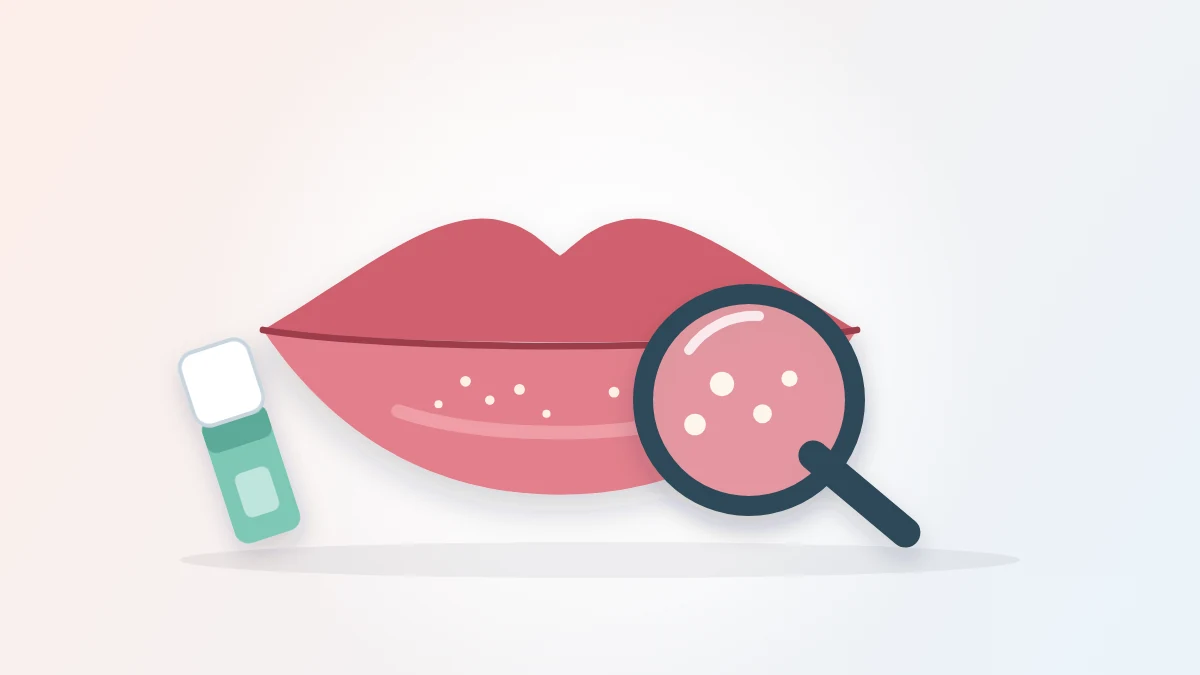
White Spots on Lips: 7 Common Causes and When to Worry
Finding small white spots on your lips can be alarming, especially if they appeared out of nowhere. The good news is that the most common cause is completely harmless. A few causes do need treatment, though, and one rare type should always be checked by a doctor. Here’s how to tell the difference.
Quick answer: White spots on lips are most often Fordyce spots, which are harmless oil glands that Cleveland Clinic says 70% to 80% of adults have. Other common causes include milia, oral thrush, cold sores and canker sores. See a doctor if a white patch can’t be wiped away, bleeds, or doesn’t heal within two weeks.
What Causes White Spots on Lips?
Most white spots on the lips fall into one of seven causes. This table gives a quick comparison before we look at each one.
| Cause | What it looks like | Contagious? | Needs treatment? |
|---|---|---|---|
| Fordyce spots | Tiny white or yellow bumps, 1 to 3 mm, often in clusters | No | No, only for cosmetic reasons |
| Milia | Small, hard, pearly white bumps | No | Usually clears on its own |
| Oral thrush | Creamy white patches, cracked mouth corners | Can spread in some cases | Yes, antifungal medicine |
| Cold sores | Tingling, then small fluid-filled blisters | Yes | Often heals alone; antivirals help |
| Canker sores | Round sore inside the lip with a white or yellow center | No | Usually heals in 1 to 2 weeks |
| Leukoplakia | Thick white or gray patch that won’t wipe off | No | Yes, needs a doctor’s exam |
| Sun damage (actinic cheilitis) | Dry, scaly, pale patch on the lower lip | No | Yes, needs a dermatologist |
1. Fordyce Spots: The Most Common Cause
Fordyce spots are enlarged oil (sebaceous) glands that show up where there’s no hair, such as the edge of the lips and inside the cheeks. According to Cleveland Clinic, they are white, yellow or skin-colored bumps about 1 to 3 millimeters wide, roughly the size of a sesame seed.
They aren’t cancerous, they aren’t an infection and they aren’t contagious. Treatment is only needed if they bother you cosmetically. A dermatologist can offer options such as laser treatment or topical retinoids.
2. Milia
Milia are tiny white cysts that form when dead skin cells get trapped under the surface instead of shedding. Cleveland Clinic notes they’re most common on the face but can appear around and inside the mouth. In adults, milia may last a few weeks to a couple of months before clearing on their own.
Don’t try to squeeze them. Popping or scraping milia can cause scarring or infection.
3. Oral Thrush (Yeast Infection)
Oral thrush is a fungal infection caused by Candida yeast. Mayo Clinic describes it as creamy white, slightly raised patches, mostly on the tongue and inner cheeks, that can look like cottage cheese. It can also cause redness and cracking at the corners of the mouth.
Thrush is more likely in babies, older adults, denture wearers, people taking antibiotics or corticosteroids, and people with uncontrolled diabetes. If you have diabetes, keeping your A1C in your target range lowers the risk. Thrush is treated with antifungal medicine, so see a doctor if you think you have it.
4. Cold Sores
Cold sores are caused by the herpes simplex virus, usually HSV-1. They often start with tingling or burning, followed by small fluid-filled blisters that can look white or yellow before they break and crust over. Mayo Clinic says they are contagious, even when you can’t see the blisters.
Stress, fatigue, sun exposure and illness can trigger outbreaks. Most heal on their own, but prescription antivirals can shorten them.
5. Canker Sores Inside the Lip
Canker sores form inside the mouth, often on the inner lip, as round sores with a white or yellow center and a red edge. They are not contagious. According to Mayo Clinic, minor canker sores usually heal without a scar in one to two weeks.
6. Leukoplakia: When a White Patch Needs a Doctor
Leukoplakia causes thick white or gray patches inside the mouth that can’t be wiped away. Mayo Clinic links it strongly to long-term tobacco use, both smoked and smokeless, and to heavy drinking. Most patches are benign, but leukoplakia raises the risk of mouth cancer, and patches mixed with red areas are a bigger concern.
7. Sun Damage on the Lower Lip
Years of sun exposure can cause actinic cheilitis, a dry, rough and sometimes whitish patch, most often on the lower lip. It is considered precancerous, so a dermatologist should look at any scaly lip patch that doesn’t go away. A lip balm with SPF 30 or higher helps protect your lips.
When Should You Worry About White Spots on Your Lips?
Most spots are harmless, but see a doctor or dentist if you notice:
- A white patch that can’t be wiped off or scraped away
- A sore or patch that doesn’t heal within two weeks, which Mayo Clinic flags as a reason to get checked
- White patches mixed with red areas, or a patch that bleeds
- A lump, numbness or trouble chewing or swallowing
- White patches in a baby’s mouth, or thrush that keeps coming back
Lip and mouth checks are also a good reason to keep up with regular checkups and dental visits.
How to Prevent White Spots on Lips
- Don’t pick or pop spots: this can cause scarring and infection.
- Protect your lips from the sun: use a lip balm with SPF every day.
- Avoid tobacco: smoking and chewing tobacco are the main risk factors for leukoplakia.
- Keep up good oral hygiene: brush twice a day, and clean dentures daily.
- Rinse after inhaled steroids: this lowers your risk of thrush.
Frequently Asked Questions
Are white spots on lips normal?
Often, yes. Fordyce spots are harmless oil glands that 70% to 80% of adults have, according to Cleveland Clinic. They are not contagious and don’t need treatment.
Are white spots on lips contagious?
It depends on the cause. Fordyce spots, milia, canker sores and leukoplakia are not contagious. Cold sores are contagious, even before blisters appear.
Can stress cause white spots on lips?
Stress can trigger cold sore outbreaks and canker sores, both of which can look white. It does not cause Fordyce spots.
How do you get rid of white spots on lips?
Treatment depends on the cause. Fordyce spots and milia usually need no treatment, thrush needs antifungal medicine, and cold sores may be treated with antivirals. A doctor should check patches that won’t wipe off.
Should I pop white spots on my lips?
No. Squeezing milia or other bumps can cause scarring or infection. If a spot bothers you, a dermatologist can remove it safely.
The Bottom Line
White spots on lips are usually Fordyce spots or milia, which are harmless. Thrush, cold sores and canker sores are common and treatable. Get any white patch that won’t wipe off, bleeds or lasts longer than two weeks checked by a doctor or dentist.
Sources
- Fordyce Spots, Cleveland Clinic
- Milia, Cleveland Clinic
- Oral thrush: Symptoms and causes, Mayo Clinic
- Cold sore: Symptoms and causes, Mayo Clinic
- Canker sore: Symptoms and causes, Mayo Clinic
- Leukoplakia: Symptoms and causes, Mayo Clinic
Sources accessed October 7, 2026. This article is general information and isn’t a substitute for advice from your doctor or dentist.