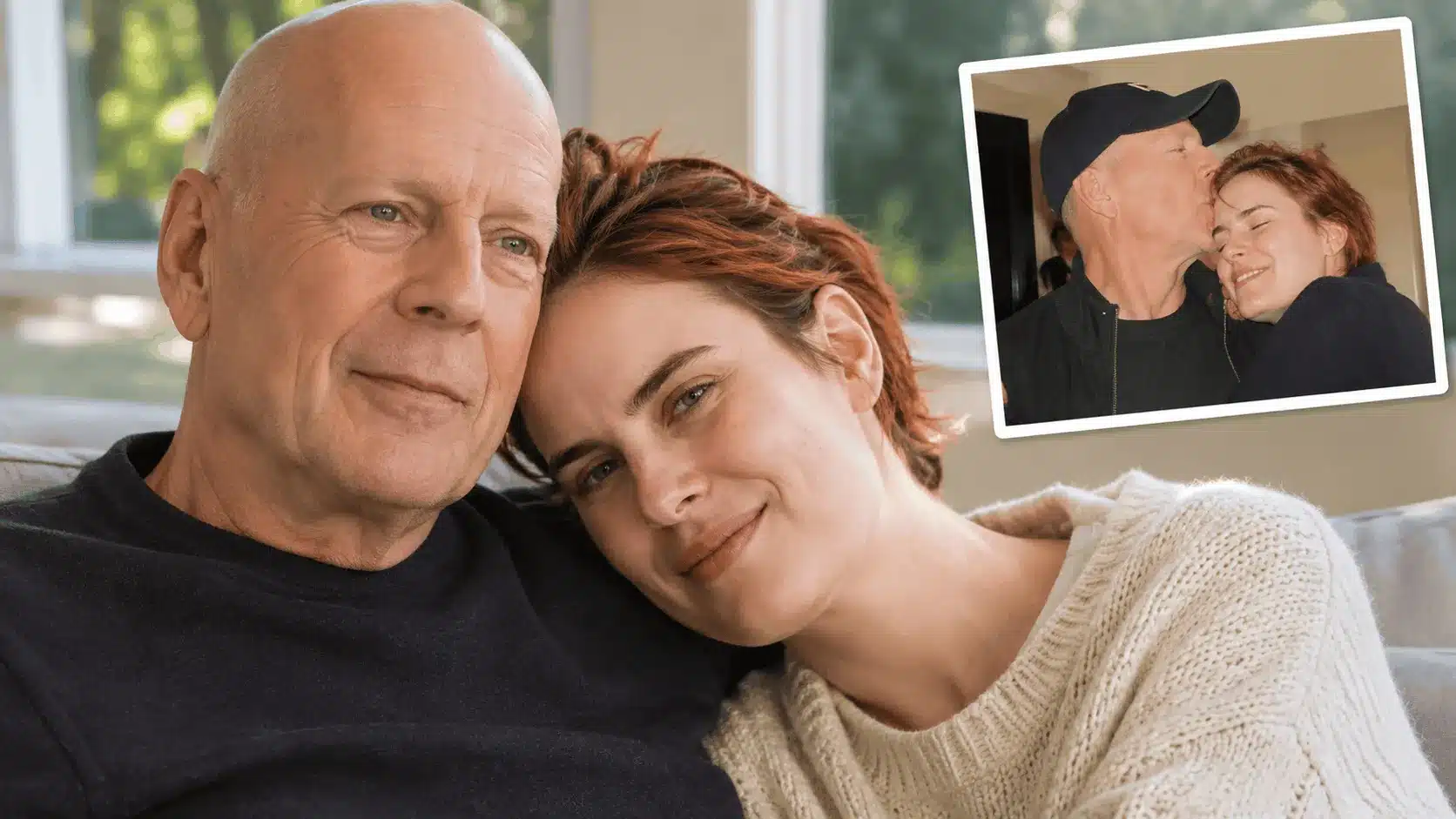
Bruce Willis’ Daughter Tallulah Shares Emotional Unseen Photo Amid His Dementia Battle and Defends Family Privacy
Published November 13, 2026
Bruce Willis, 71, remains surrounded by family as he lives with frontotemporal dementia (FTD). This week, his youngest daughter with Demi Moore, Tallulah Willis, shared a never-before-seen photo of the two of them. Around the same time, she pushed back against an anonymous source quoted in the press about her father’s condition. Together, the two posts offer a glimpse of the family’s closeness and of how protective they’ve become of his privacy.
Tallulah Willis Shares an Unseen 2023 Photo With Her Dad
On November 9, Tallulah, 32, posted the image to Instagram. In it, Bruce sits in an armchair with his arms around Tallulah, who is seated at his feet, and the two are holding hands, according to Mamamia.
She explained the picture’s history in her caption: it’s a 2023 photo, taken on a camera her mom gave her in 2015, by the man she married in 2026. The photographer is musician Justin Acee, whom Tallulah married on August 8 in Sun Valley, Idaho. At the wedding weekend, Bruce was photographed smiling with one arm around his daughter while holding Acee’s hand.
The post connects three generations of family memories in one frame: a gift from Demi Moore, a moment with Bruce, and the man who later became Tallulah’s husband.
Tallulah Responds to Anonymous Health Claims
Around the same time, Tallulah used her Instagram Stories to criticize a news report that quoted an unnamed source about her father’s cognitive condition. According to TMZ, she told the person who had spoken about her dad’s health to “stay away” from her family. TMZ reported that the source was allegedly a family friend. The Story has since expired.
The underlying claims came from a British tabloid source who described a significant mental decline. Bruce’s family has not confirmed those details. Readers should treat anonymous reports with caution.
This isn’t the first time the family has addressed it. Bruce’s wife, Emma Heming Willis, has previously urged readers to stop reading stories that rely on “sources close to the family.” She has called anonymous speculation careless and harmful.
Bruce Willis’ Dementia Diagnosis Timeline
- March 2022: the family announced that Bruce had been diagnosed with aphasia, a condition affecting language, and that he was stepping away from acting.
- February 2023: the family shared that his diagnosis had been updated to frontotemporal dementia.
- August–September 2025: in the ABC News special Emma & Bruce Willis: The Unexpected Journey and in her book of the same name, Emma described moving Bruce into a separate, single-story home with a full-time care team.
- September 2026: in interviews with Hello! magazine and MS NOW’s Because We Care, Emma said the family has learned to adapt. She described living with ongoing grief while still finding moments of joy.
- November 2026: Tallulah shared her 2023 photo and responded to anonymous reports about her father’s health.
What Is Frontotemporal Dementia?
Frontotemporal dementia is a group of brain disorders caused by damage to the frontal and temporal lobes. Those areas help control behavior, personality, decision-making and language. According to the National Institute on Aging, symptoms often begin between ages 45 and 64, younger than is typical for Alzheimer’s disease.
How FTD differs from Alzheimer’s
Alzheimer’s usually begins with memory loss. FTD more often starts with changes in behavior, personality or language, while memory may be less affected early on.
Common symptoms
- Behavioral changes: apathy, loss of empathy, impulsive or socially inappropriate behavior
- Language problems (primary progressive aphasia): trouble finding words, speaking or understanding
- Movement problems in some forms of the disease
Symptoms and the pace of progression vary widely from person to person, so one patient’s experience shouldn’t be taken as a blueprint for another’s.
Treatment and care
There’s currently no cure and no treatment proven to slow FTD. Care focuses on managing symptoms and supporting quality of life. That can include certain medications for behavioral symptoms, speech and occupational therapy, a calm and structured environment, and planning for safety. Getting an accurate diagnosis from a specialist, often a neurologist, is important because FTD is frequently mistaken for psychiatric conditions. The NHS and the Association for Frontotemporal Degeneration both offer guidance for families and caregivers.
Emma Heming Willis’ Caregiving Journey
Emma, who married Bruce in 2009 and shares daughters Mabel, 14, and Evelyn, 12, with him, has become one of the most visible advocates for FTD caregivers.
In the 2025 ABC special, she said the family had moved Bruce into a nearby single-story “second home,” where he receives round-the-clock care, as reported by The Hollywood Reporter. She called it one of the hardest decisions she has made. She explained that the quieter setting is easier for Bruce to navigate, and that she believes he would want their daughters to have a home suited to their needs. Emma has said she and the girls spend a lot of time there, and has described the house as filled with love, care and laughter.
Some people criticized the arrangement online. Emma has defended it as the safest and best decision for Bruce and their young daughters. Arranging professional, full-time care is a common and often necessary step for families facing advanced FTD. It’s not a sign of neglect.
Emma has also been candid about the toll of caregiving. She has described a constant state of grief, and stressed that caregivers need support too. Her book, The Unexpected Journey: Finding Strength, Hope, and Yourself on the Caregiving Path, aims to help other families navigating dementia.
Demi Moore’s Continued Support
Demi Moore, who was married to Bruce from 1987 to 2000 and shares Rumer, Scout and Tallulah with him, has remained a close part of his life. She has said she visits him regularly, and in March 2025 she shared family photos to celebrate his 70th birthday. Emma has said she turns to her stepdaughters and Demi for support in navigating Bruce’s illness. Together, the extended family has become a widely cited example of a blended family pulling together around a loved one’s care.
Why Family Privacy Matters in Dementia
People living with advanced dementia often can’t speak for themselves about what’s shared publicly. That makes families the main guardians of their dignity. The Willis family’s decisions to share some moments, like Tallulah’s photo, while pushing back on unverified claims, reflect a balance many caregivers recognize. They want to keep their loved one present in the world without exposing him to speculation.
Support for Families Facing FTD
If someone you love shows changes in behavior, personality or language, especially before age 65, talk to a doctor and ask about a specialist evaluation. Caregivers can find education and support through dementia organizations and local caregiver groups. Taking care of your own health matters too. Our guide to calming a racing mind at night may help with the stress that often comes with caregiving.
Frequently Asked Questions
What did Tallulah Willis share about Bruce Willis?
On November 9, 2026, she posted a previously unseen 2023 photo of herself with her father, taken by her now-husband, Justin Acee, on a camera Demi Moore gave her in 2015.
Why did Tallulah criticize a news report?
She objected to an anonymous source who described her father’s condition to the press, and told that person to stay away from her family. The family hasn’t confirmed the source’s claims.
When was Bruce Willis diagnosed with frontotemporal dementia?
His family announced aphasia in March 2022 and confirmed an FTD diagnosis in February 2023.
Where does Bruce Willis live now?
According to Emma Heming Willis, he lives in a nearby single-story home with a full-time care team, where the family visits often.
Is there a cure for frontotemporal dementia?
No. Treatment focuses on managing symptoms and supporting the person and their caregivers.
Conclusion
Tallulah Willis’ tender photo and her firm response to anonymous claims tell the same story from two angles. Bruce Willis is deeply loved, and his family is determined to protect him. As they continue to share selected moments on their own terms, their openness about FTD has also helped raise awareness of a disease that affects many families far from the spotlight.
Find more evidence-based health guides on Learning Joan.
This article is for general information only and is not medical advice.
