
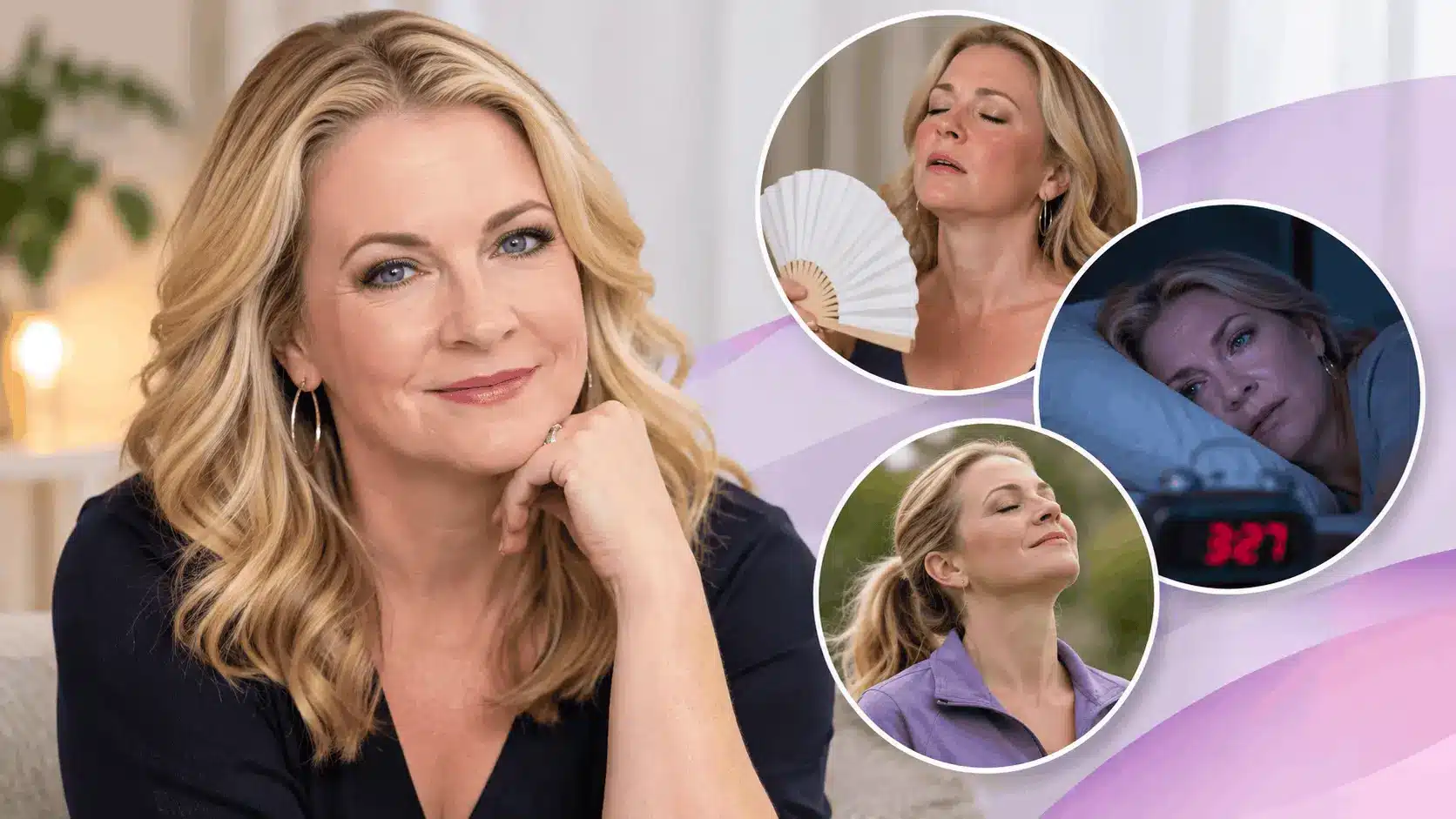
Melissa Joan Hart Opens Up About Menopause, Hot Flashes and Sleepless Nights at 50
Melissa Joan Hart, 50, says night sweats were the first sign of menopause, and they still wake her up at night. The actor has joined a Bayer awareness campaign about hot flashes. She is open about what has been hard and what she still doesn’t know, and she wants the women she grew up with to talk to each other and to their doctors before they decide to just put up with it.
It Started With Night Sweats
For years, Hart was the kind of sleeper who wore socks to bed because she always felt cold. That changed when menopause began. In a Nov. 3 interview with People, she said that “it started with night sweats,” and that she would wake up covered in sweat.
She told NewBeauty that she would wake up drenched and unable to get back to sleep. Even her weighted blanket became hard to sleep under, and she sometimes threw it off in the middle of a hot flash. Hart calls sleep her most important beauty habit, so losing it has hit her hard. (If racing thoughts also keep you up, see our guide on how to stop overthinking at night.)
Coverage from Woman’s World (Nov. 4) also focused on how disruptive those wake-ups have been. Hart said the night sweats affect her whole life and that the episodes can be alarming when they happen.
Worrying About Hot Flashes on Set
Her job adds another layer of worry. Hart told People she has grown fearful of having a hot flash while filming or at work, where it could stop her in her tracks. She said it has also happened at her kids’ school events and football games, though she finds it a little easier to hide in those settings.
She said the hot flashes have become more frequent, and that this pushed her to look for help instead of quietly putting up with them.
A Topic Nobody Talked About
Hart grew up in a home where nobody said the word menopause. She remembers seeing her mother stand in front of an open refrigerator to cool off, and at the time she thought that was simply normal. Now she wants to change that pattern. She encourages women to talk to their friends, their mothers and their daughters, and she believes her generation is in a better position than the one before it.
The Bayer Campaign and What Hart Has Said About Treatment
In October, Bayer announced that Hart had joined its “Life Doesn’t Stop for a Hot Flash” campaign. The campaign promotes Lynkuet (elinzanetant), the company’s hormone-free prescription treatment for moderate to severe menopausal hot flashes. This is a paid partnership, and the campaign’s messages come from Bayer.
Hart is not currently taking Lynkuet. She confirmed this to People, and Bayer’s own announcement says she is not a Lynkuet patient. She told People she plans a “very, very big conversation” with her doctor at her next appointment. She also told NewBeauty that until recently she didn’t know treatment options existed and assumed women just had to suffer through it.
Diana Bitner, MD, an OB-GYN who appeared alongside Hart in the campaign, told NewBeauty that patients should track how often their hot flashes happen and bring that list to their appointments. She also said doctors should lay out every option, including doing nothing.
What Are Hot Flashes, and When Are They “Severe”?
Hot flashes and night sweats are called vasomotor symptoms. They are sudden waves of heat, flushing and sweating, and they are linked to changing estrogen levels, which affect how the brain controls body temperature. According to The Menopause Society’s 2023 position statement, they are the most common menopause symptom and affect up to 80% of women. Many women have them for several years.
Clinicians usually judge how severe hot flashes are by how much they interfere with your life, not only by how hot you feel. Hart said she was surprised to learn that a hot flash that wakes you from sleep, or stops what you’re doing, counts as moderate to severe.
Evidence-Based Ways to Manage Them
Nonmedication approaches
The Menopause Society’s review recommends these approaches, based on clinical evidence:
- Cognitive behavioral therapy (CBT) and clinical hypnosis, which had the strongest support among nonmedication options
- Weight loss, for some women (see how many steps a day help with weight loss)
- Stellate ganglion block, a nerve-block procedure, for selected patients
The same review found too little evidence to recommend several popular approaches for treating hot flashes, including paced breathing, herbal supplements, exercise and yoga, and avoiding triggers. Cooling the bedroom and wearing light layers may still make you more comfortable, but they aren’t proven treatments. Regular activity is still good for your overall health; walking counts as exercise.
Hormone therapy
Hormone therapy is still the most effective treatment for hot flashes. The Menopause Society says it should be considered for women within 10 years of their last period who have no reasons to avoid it. In November 2025, the FDA began removing the boxed-warning language about heart disease, breast cancer and dementia from hormone therapy labels. Estrogen-only products still carry a boxed warning about endometrial cancer. Hormone therapy is not right for everyone: a history of breast cancer, blood clots or stroke, among other conditions, can rule it out. The decision should be made with a clinician who knows your health history.
Nonhormonal prescription options
- Neurokinin receptor blockers. These include fezolinetant (Veozah) and elinzanetant (Lynkuet). Both act on the brain’s temperature-control center.
- Certain antidepressants and other drugs. Low-dose paroxetine, other SSRIs and SNRIs, gabapentin and oxybutynin also have evidence behind them.
Important Safety Cautions
No hot flash treatment is right for everyone. Lynkuet’s FDA prescribing information lists these cautions:
- It can cause sleepiness and daytime impairment. Avoid driving until you know how it affects you.
- It requires liver testing before you start, and it can raise liver enzymes.
- It must not be used during pregnancy. It also interacts with some medications and with grapefruit.
Veozah carries an FDA boxed warning about rare but serious liver injury and requires regular blood tests. Always give your doctor a full list of the medications and supplements you take.
Frequently Asked Questions
Is Melissa Joan Hart taking Lynkuet?
No. She told People she isn’t currently taking it. She plans to discuss treatment options with her doctor.
What was Hart’s first menopause symptom?
Night sweats. They woke her up and made it hard to fall back asleep.
Are night sweats the same as hot flashes?
Basically, yes. A night sweat is a hot flash that happens while you sleep, and both are vasomotor symptoms.
When should I see a doctor about hot flashes?
See a doctor if hot flashes disturb your sleep, work or mood. Also see one if you have unexplained sweating, which can have causes other than menopause. A routine checkup is a good time to bring it up; here’s how often you should get a physical.
Do supplements help with hot flashes?
The Menopause Society found that the evidence is not strong enough to recommend herbal or dietary supplements for hot flashes.
Is hormone therapy safe?
For many healthy women under 60, or within 10 years of menopause, the benefits often outweigh the risks. Whether it’s safe for you depends on your personal medical history.
The Bottom Line
Hart’s story is a familiar one: interrupted sleep, worry about having a hot flash at work, and a mother who never named what she was going through. She hasn’t chosen a treatment yet. Her message is simpler than that. Women shouldn’t assume they have to just suffer through menopause, and the next step is an honest conversation with a qualified clinician.
This article is for general information only and is not medical advice. Melissa Joan Hart’s comments are taken from her interviews. Campaign statements come from Bayer, and medical guidance comes from the sources linked above.