
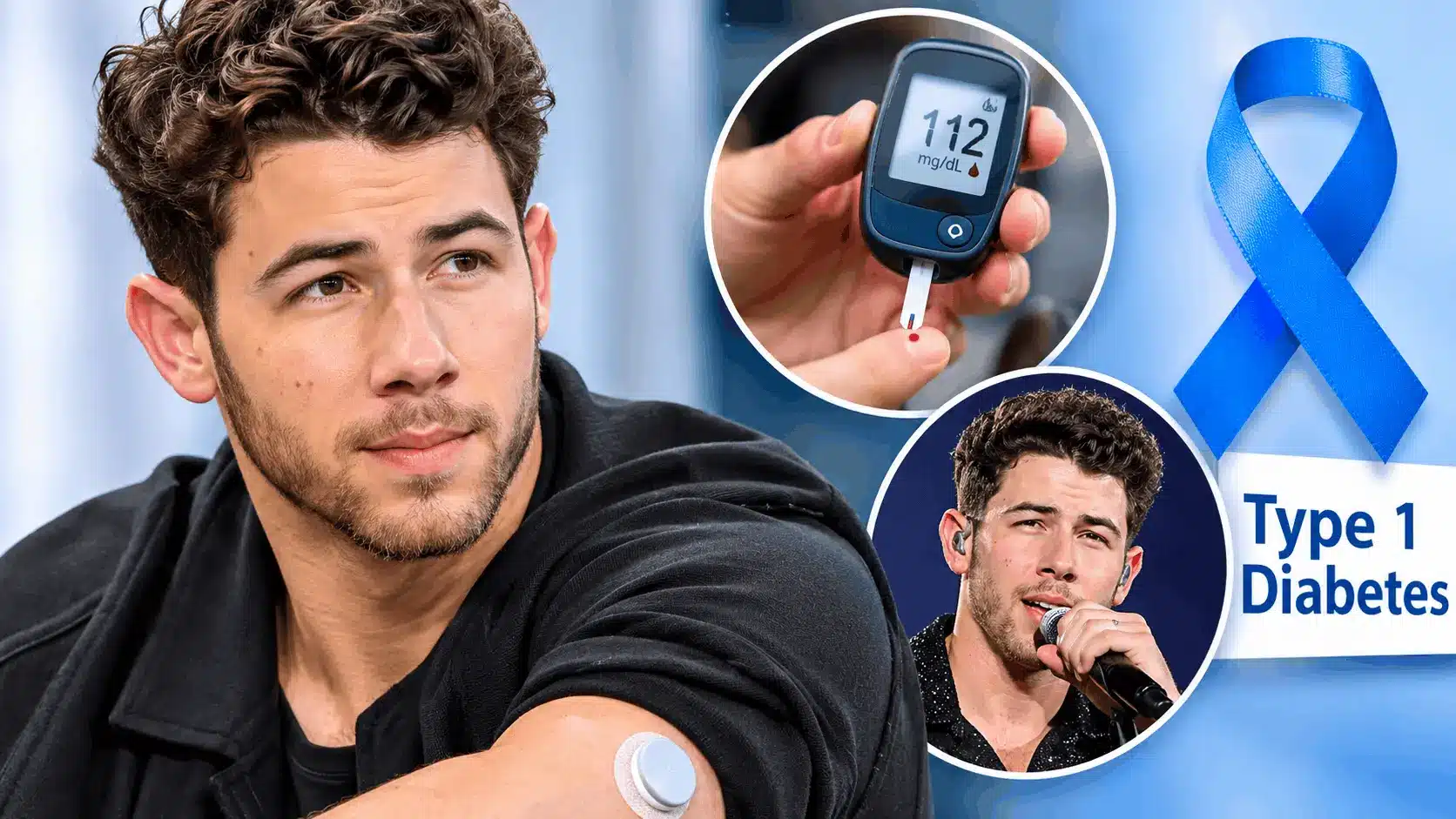
Nick Jonas Opens Up About Living With Type 1 Diabetes: The Unpredictability, the Daily Grind and Why He Shares His Story
Published November 9, 2026
After 21 years with Type 1 diabetes, Nick Jonas says the condition still surprises him. In an open letter released this month as part of Dexcom’s “A Letter to Diabetes” campaign, the 34-year-old singer describes his diabetes as an “old friend” that he is grateful to, and sometimes resents. The letter is a frank look at the daily, often invisible work of living with Type 1 diabetes. It comes as National Diabetes Awareness Month and World Diabetes Day (November 14) bring new attention to the disease.
Nick Jonas’s Diabetes Diagnosis at 13
Jonas was diagnosed with Type 1 diabetes in 2005, when he was 13 and already touring with his brothers. In his letter, he writes that the condition’s unpredictability threw him from the start. Over time, he says, it dismantled his belief that he could keep everything in his life under control.
He has also described feeling misunderstood growing up, at school and in many social circles. Being open about his diagnosis later changed that. Talking publicly about Type 1 diabetes, and meeting others who live with it, gave him a sense of belonging he hadn’t found elsewhere, he wrote. (E! News via Yahoo)
“Part of Me Resents You”: The Emotional Side of Living With Type 1 Diabetes
The most striking part of the letter is its honesty about mixed feelings. Jonas writes that he is grateful for what diabetes taught him about letting go of control. But he also states plainly, “Part of me resents you for it,” and admits there are days he wonders what life would be like without it.
That mix of acceptance and frustration is familiar to many people with chronic illness. Diabetes professionals have a name for the emotional strain of managing the disease day after day: diabetes distress. It’s different from depression, though the two can overlap. The American Diabetes Association’s standards of care recommend that clinicians regularly check in on the emotional well-being of people with diabetes, not just their lab results.
Jonas’s feelings are his own, and everyone’s experience is different. Still, his candor gives voice to something many patients feel but rarely say out loud. If worry or racing thoughts are keeping you up, these ways to quiet your mind at night may help, along with talking to your care team.
Hundreds of Small Decisions: Daily Diabetes Management
Jonas describes the near-constant mental work of the disease. He checks his phone for glucose readings “every few minutes,” and gives himself an insulin dose through his pump before eating a snack with a specific number of carbohydrates. He says these are a few of the hundreds of small decisions he makes every week, most of which go unnoticed by people around him. (Entertainment Nutz)
What Type 1 diabetes management typically involves
The following describes general medical practice, not Jonas’s personal plan:
- Monitoring glucose throughout the day with finger-stick meters or a continuous glucose monitor (CGM).
- Taking insulin every day through injections or an insulin pump. That usually means a steady “basal” dose plus a “bolus” dose with meals or to correct high readings.
- Counting carbohydrates to match insulin doses to food.
- Adjusting for exercise, stress, illness, sleep and hormones, all of which can shift glucose levels.
- Regular checkups, including the A1C test, which reflects average glucose over about three months. Learn more about what a normal A1C is.
Understanding Type 1 Diabetes: The Medical Facts
Type 1 diabetes is an autoimmune disease. The immune system mistakenly attacks the insulin-producing beta cells in the pancreas. Without enough insulin, glucose can’t move from the blood into the body’s cells for energy. People with Type 1 diabetes need insulin to survive. Unlike Type 2 diabetes, it isn’t caused by lifestyle, and it can’t currently be prevented.
According to the CDC’s National Diabetes Statistics Report, about 2.1 million people in the U.S. have diagnosed Type 1 diabetes. That includes roughly 314,000 children and teens under 20.
Highs and lows: hyperglycemia and hypoglycemia
- Hypoglycemia (low blood sugar) can cause shakiness, sweating, confusion and, if severe, seizures or loss of consciousness. It often happens when there’s too much insulin relative to food or activity.
- Hyperglycemia (high blood sugar) can cause thirst, frequent urination and fatigue. Over time it raises the risk of complications affecting the eyes, kidneys, nerves and heart. Very high levels with too little insulin can lead to diabetic ketoacidosis (DKA), a medical emergency.
Because food, activity, stress and illness all affect glucose, the same routine can produce different numbers on different days. That’s the unpredictability Jonas describes.
Balancing a Music Career, Family and Diabetes
Jonas has spent his entire adult career managing diabetes on tour, on stage and on set, and he is now a father. He has said publicly over the years that he uses technology to manage his glucose while performing. In his letter, he says his biggest motivation for speaking out is the newly diagnosed 13-year-old lying scared in a hospital bed, who he hopes can see someone pursuing their dreams while living with the disease.
He also co-founded Beyond Type 1, a nonprofit that offers education and community for people affected by Type 1 diabetes.
Dexcom’s “A Letter to Diabetes” Campaign
Dexcom, a manufacturer of continuous glucose monitors, launched A Letter to Diabetes on November 2 to mark National Diabetes Awareness Month and World Diabetes Day. The campaign asks a simple question: if you could say anything to diabetes, what would you say?
- Who can take part: People living with diabetes, family members, caregivers and healthcare professionals.
- How: By submitting a letter through ALetterToDiabetes.com throughout November, and reading others’ stories.
- Featured voices: Jonas and several others from the diabetes community, including influencers and advocates, according to Fierce Pharma.
Disclosure: This is a corporate awareness campaign by a medical device company. Jonas has a long-standing commercial partnership with Dexcom and wears its CGM. Learning Joan has no relationship with Dexcom, and this article is not an endorsement of any brand or device.
How Continuous Glucose Monitoring Supports Diabetes Management
A continuous glucose monitor uses a small sensor under the skin to estimate glucose levels every few minutes. It sends readings to a phone, reader or insulin pump. CGMs show trend arrows and can sound alerts for highs and lows, which helps people act before a problem becomes serious. Many CGMs also work with insulin pumps in automated insulin delivery systems.
The research is encouraging. In the DIAMOND randomized trial, published in JAMA in 2017, 158 adults with Type 1 diabetes who used multiple daily insulin injections were followed for 24 weeks. Their A1C fell by about 1.0 percentage point with CGM, compared with 0.4 points on usual care. The study was funded by Dexcom, and it focused on adults with above-target A1C levels.
CGMs aren’t perfect, though. Sensors can occasionally give inaccurate readings, skin irritation can occur, and cost or insurance coverage can be a barrier. The right tools differ from person to person, which is why diabetes care should be individualized with a healthcare team.
Why Education, Emotional Support and Community Matter
Technology helps, but it doesn’t replace education and support. Diabetes self-management education programs teach the practical skills behind insulin dosing, nutrition and handling sick days. Peer communities, whether online, through nonprofits or in clinics, can reduce the isolation Jonas says he once felt. Mental health support is part of good diabetes care, not an extra.
Simple, practical resources also help day to day, from understanding how food affects your numbers to finding blood-sugar-friendly recipes. Regular checkups give you a chance to raise both physical and emotional concerns. Here’s how often to get a physical.
Diabetes Awareness Month and World Diabetes Day
November is National Diabetes Awareness Month in the U.S. World Diabetes Day, led by the International Diabetes Federation, falls on November 14, the birthday of Sir Frederick Banting, who co-discovered insulin in 1921. Both are meant to raise awareness, reduce stigma and push for better access to care for people with all types of diabetes.
The Bottom Line: Diabetes Doesn’t Define You
Nick Jonas’s letter doesn’t pretend that Type 1 diabetes is easy. He admits to frustration, resentment and the exhausting stream of daily decisions. He also describes resilience, community and a career built alongside the disease, not in spite of it. His experience is personal and not a medical blueprint. But his message is one many people with diabetes will recognize. With the right medical care, education, technology and support, living with diabetes can still mean living fully, and no one has to manage it alone.
This article is for general information only and is not medical advice. If you have diabetes, talk to your healthcare team before making changes to your treatment.